Hydroascendant
2027
H97 x 42 x 36 in
H246 x 107 x 91.5 cm
Hand-carved proprietary compound (oyster shell, polymer, marble, and epoxy), steel
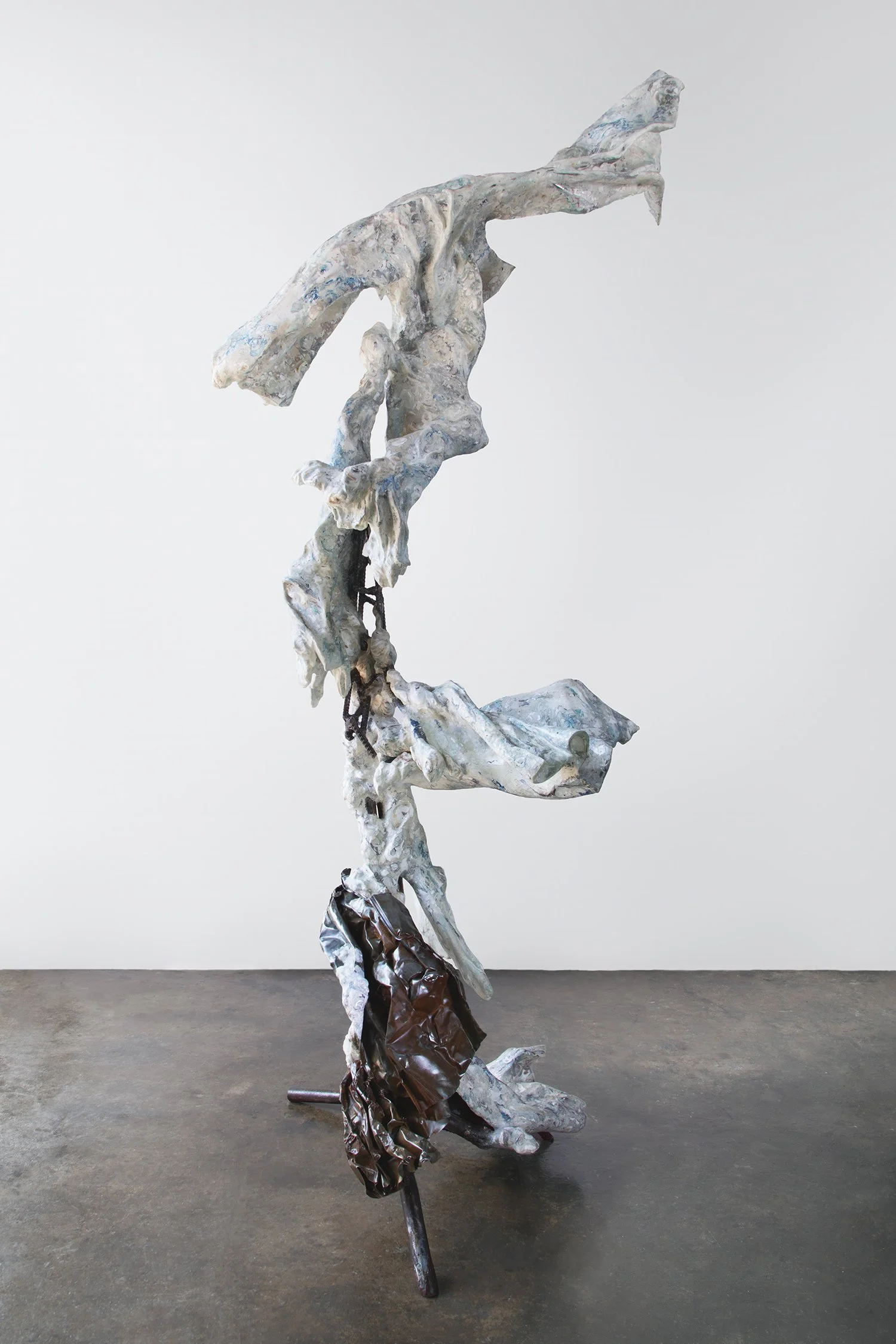
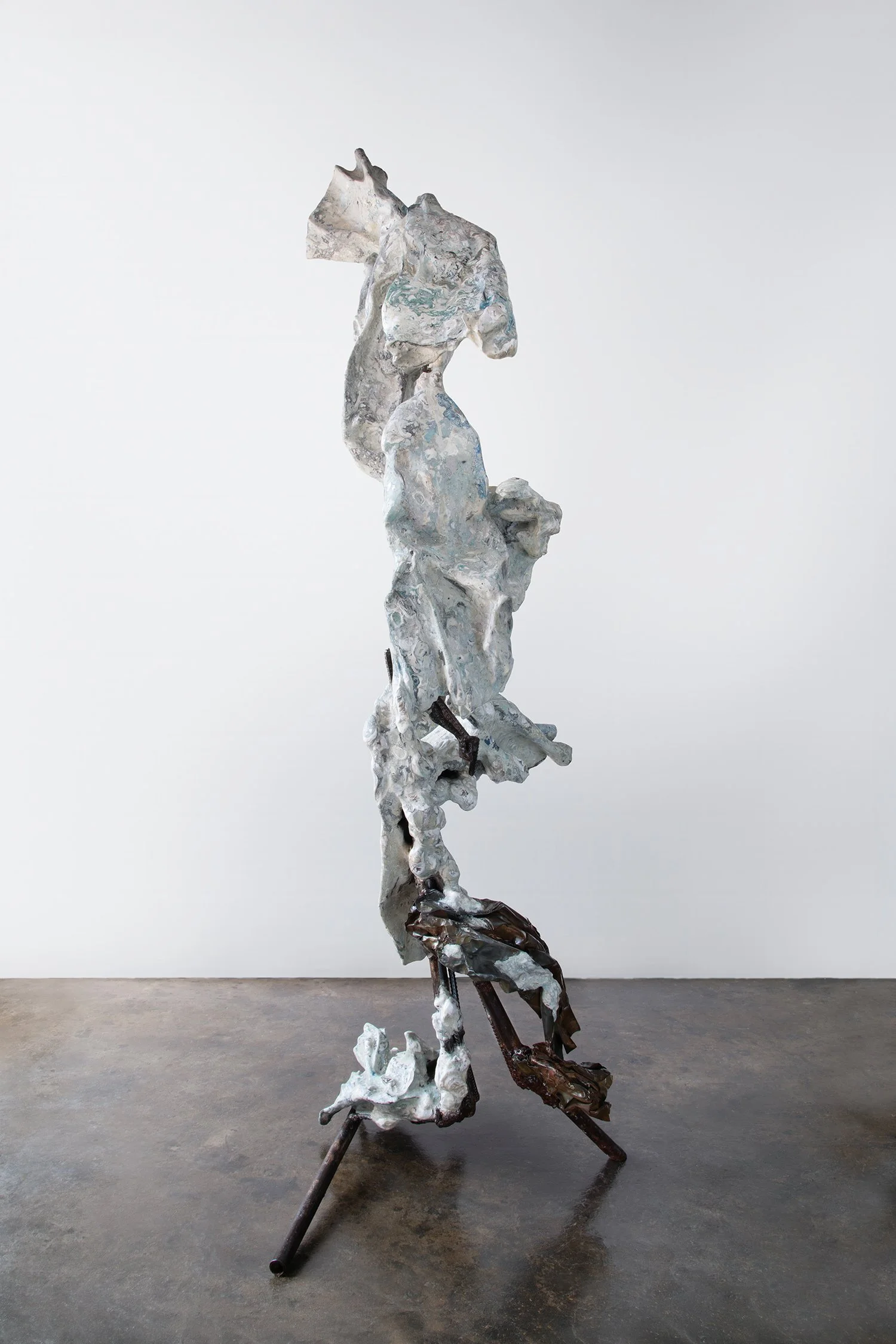
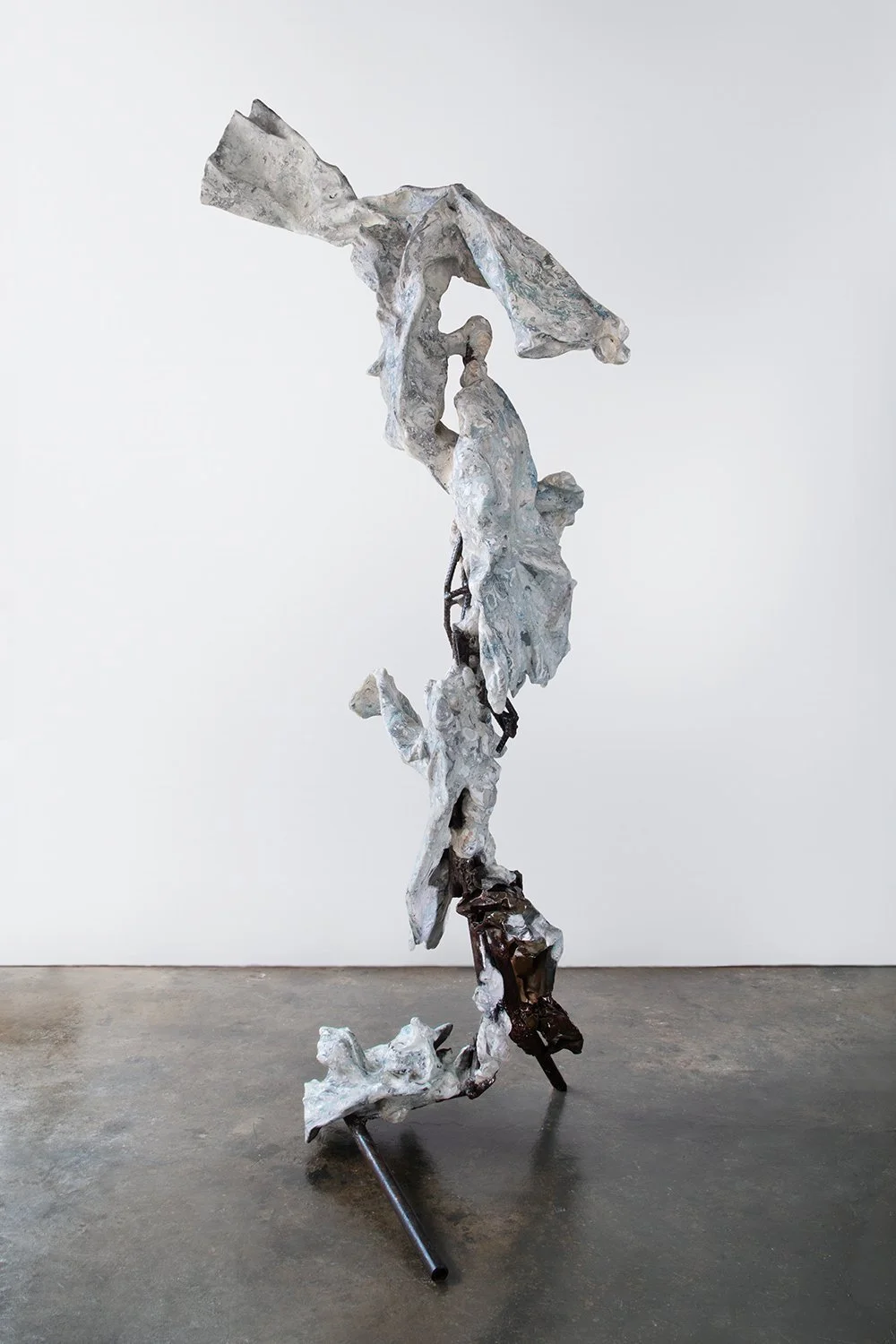
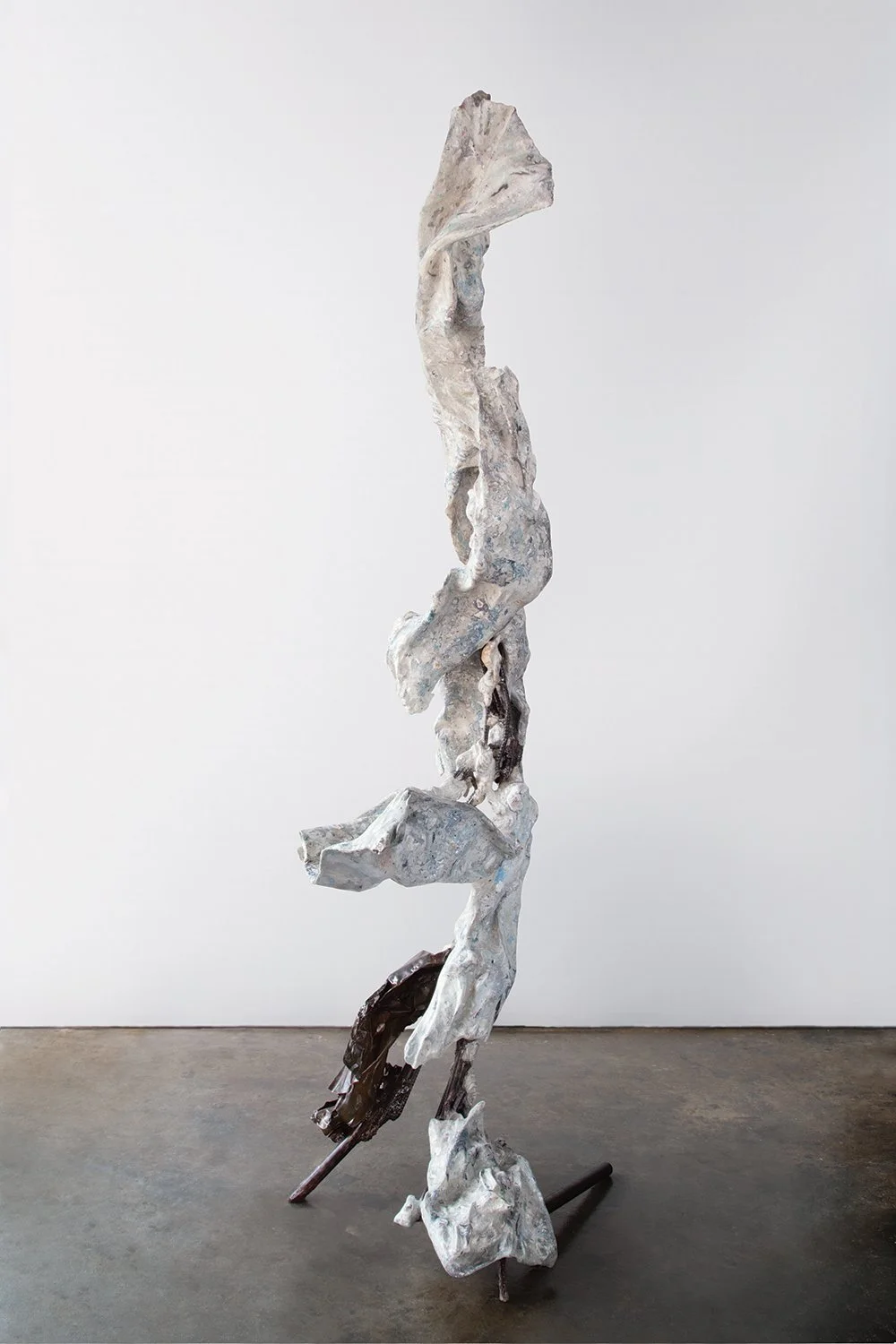
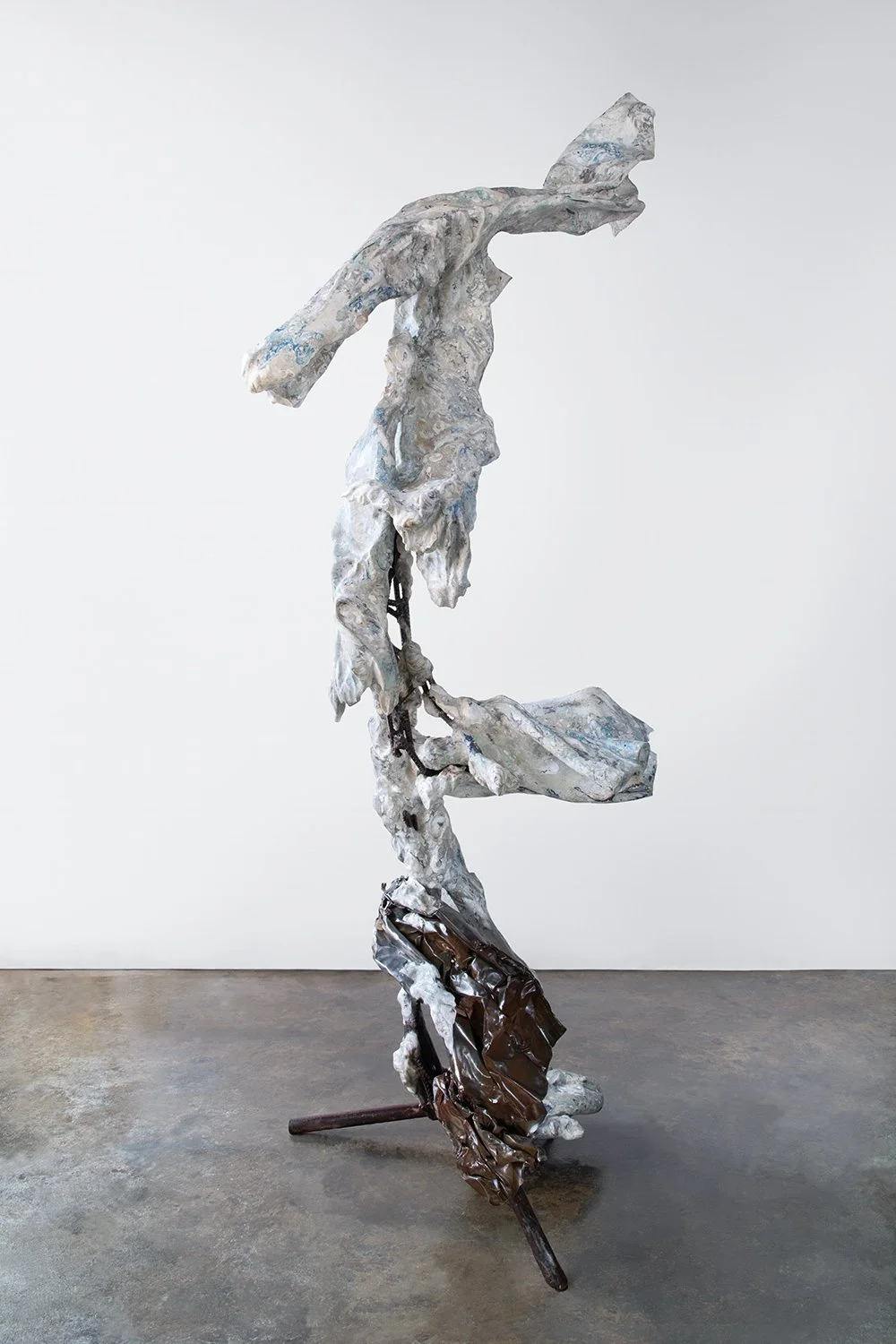
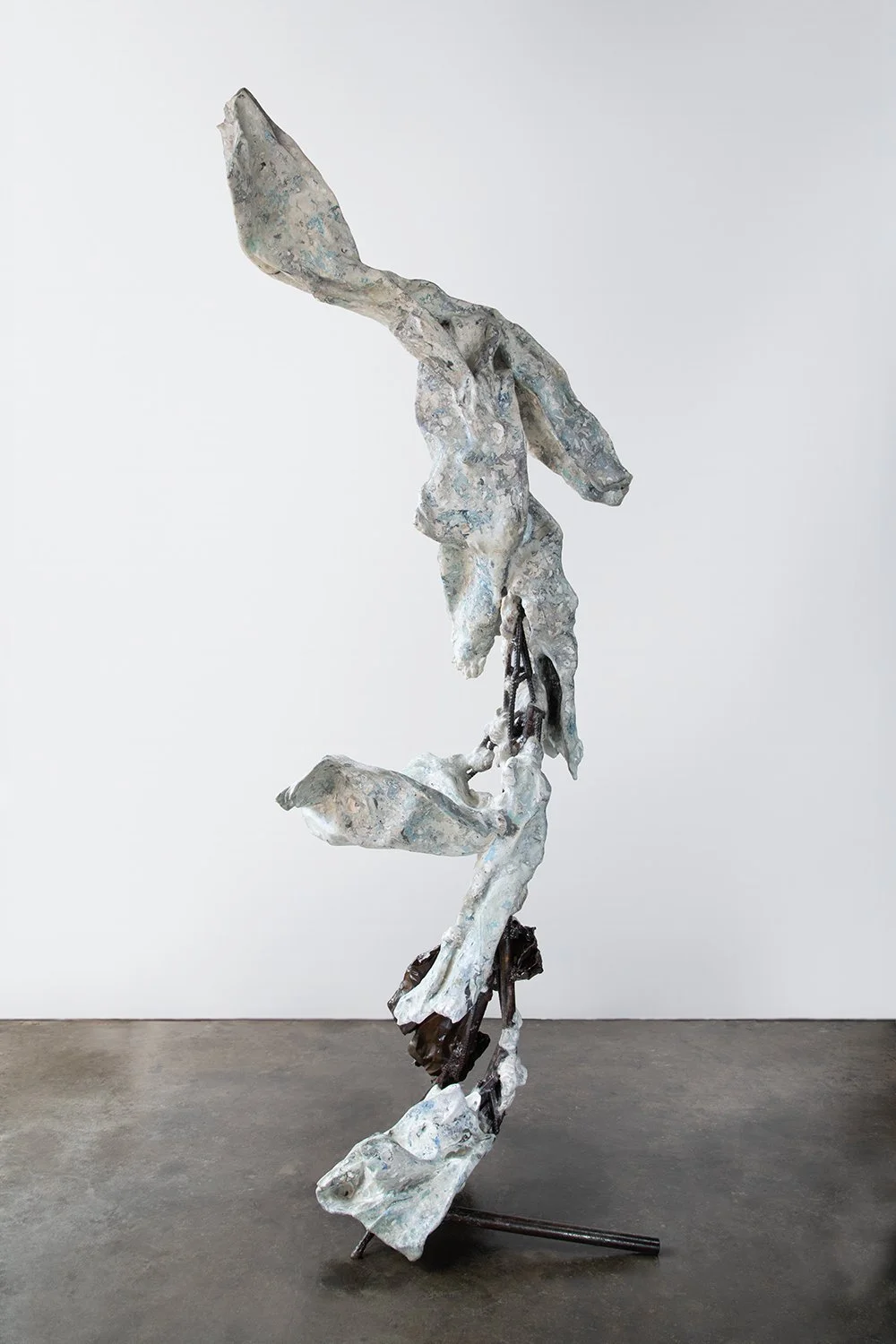
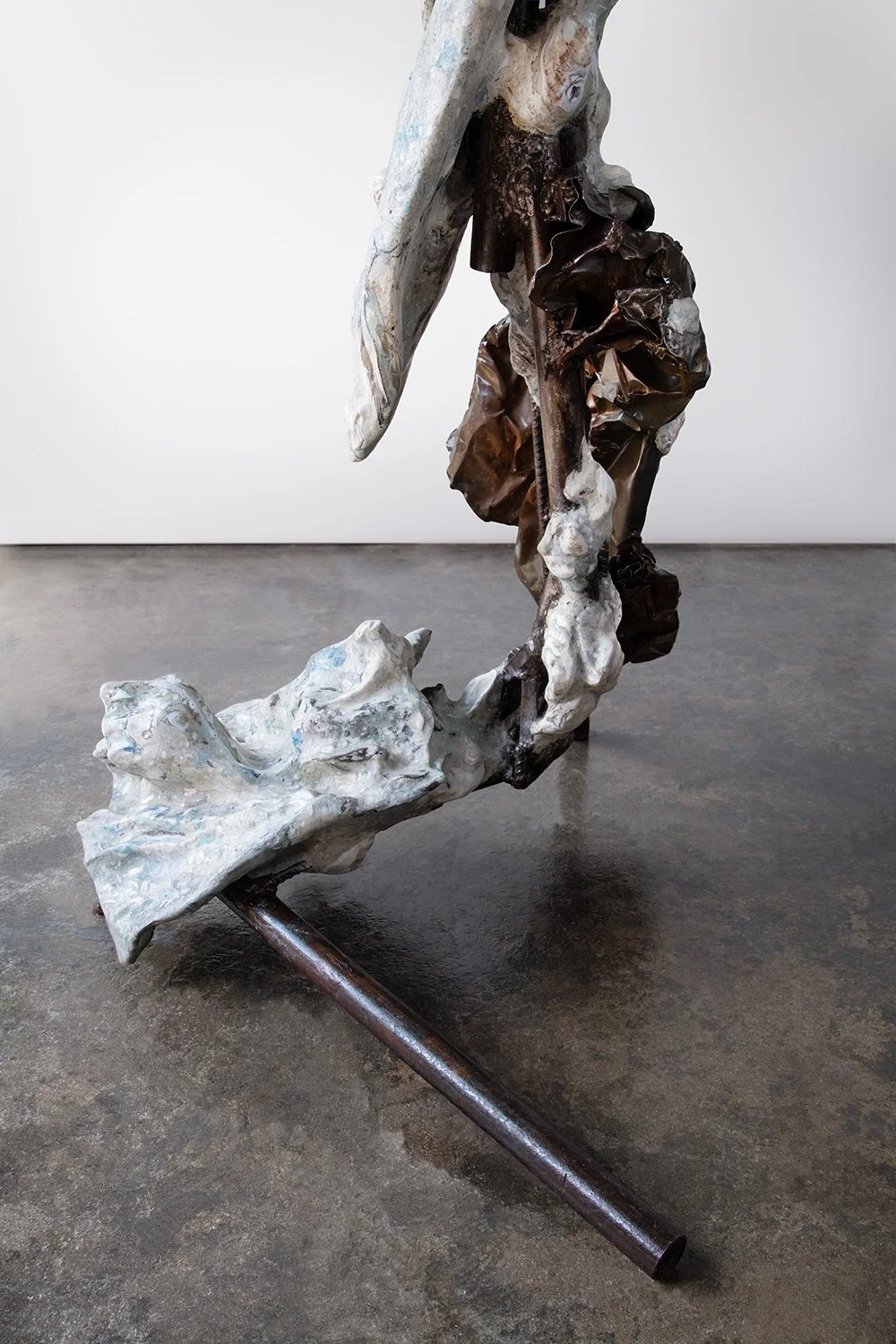
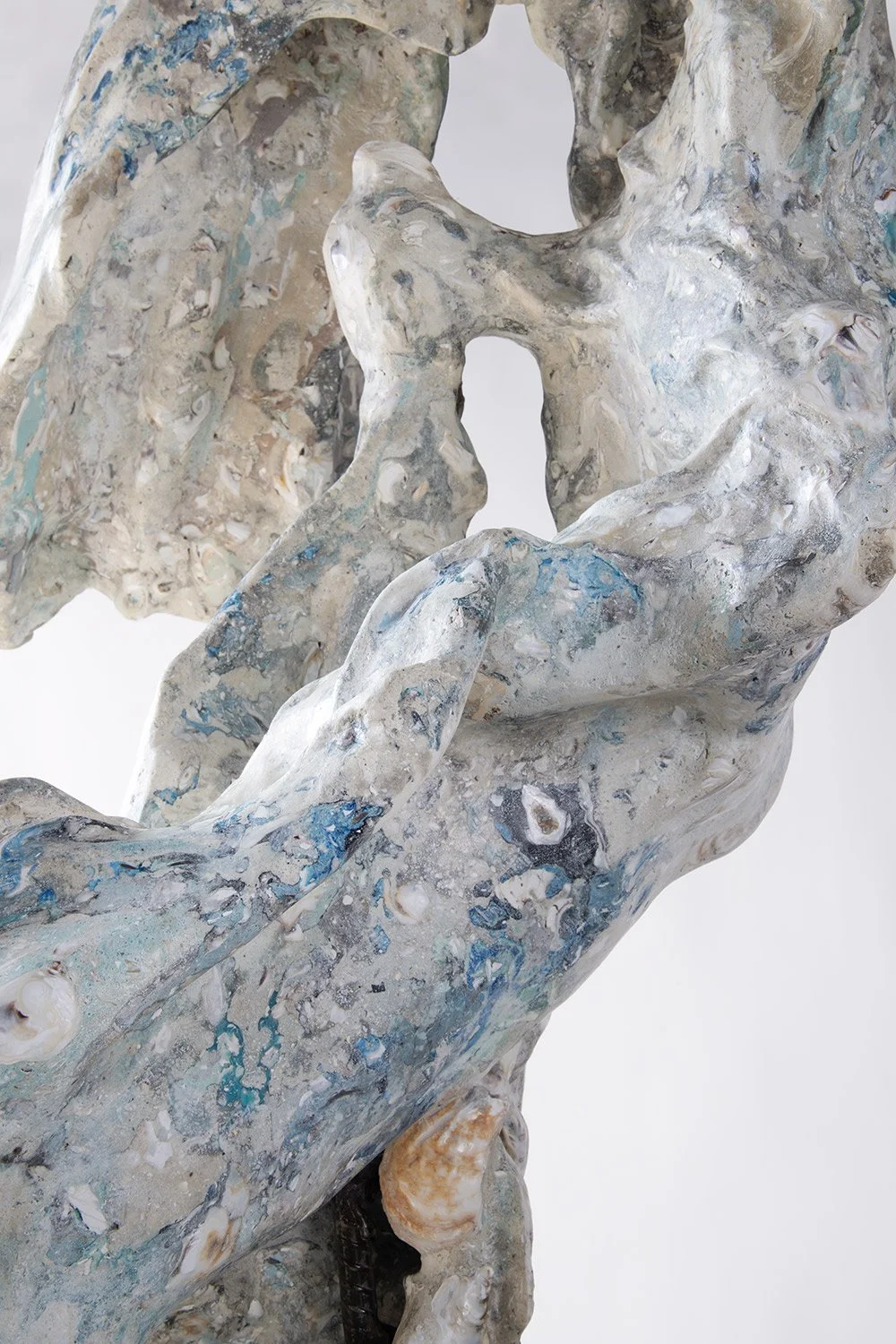
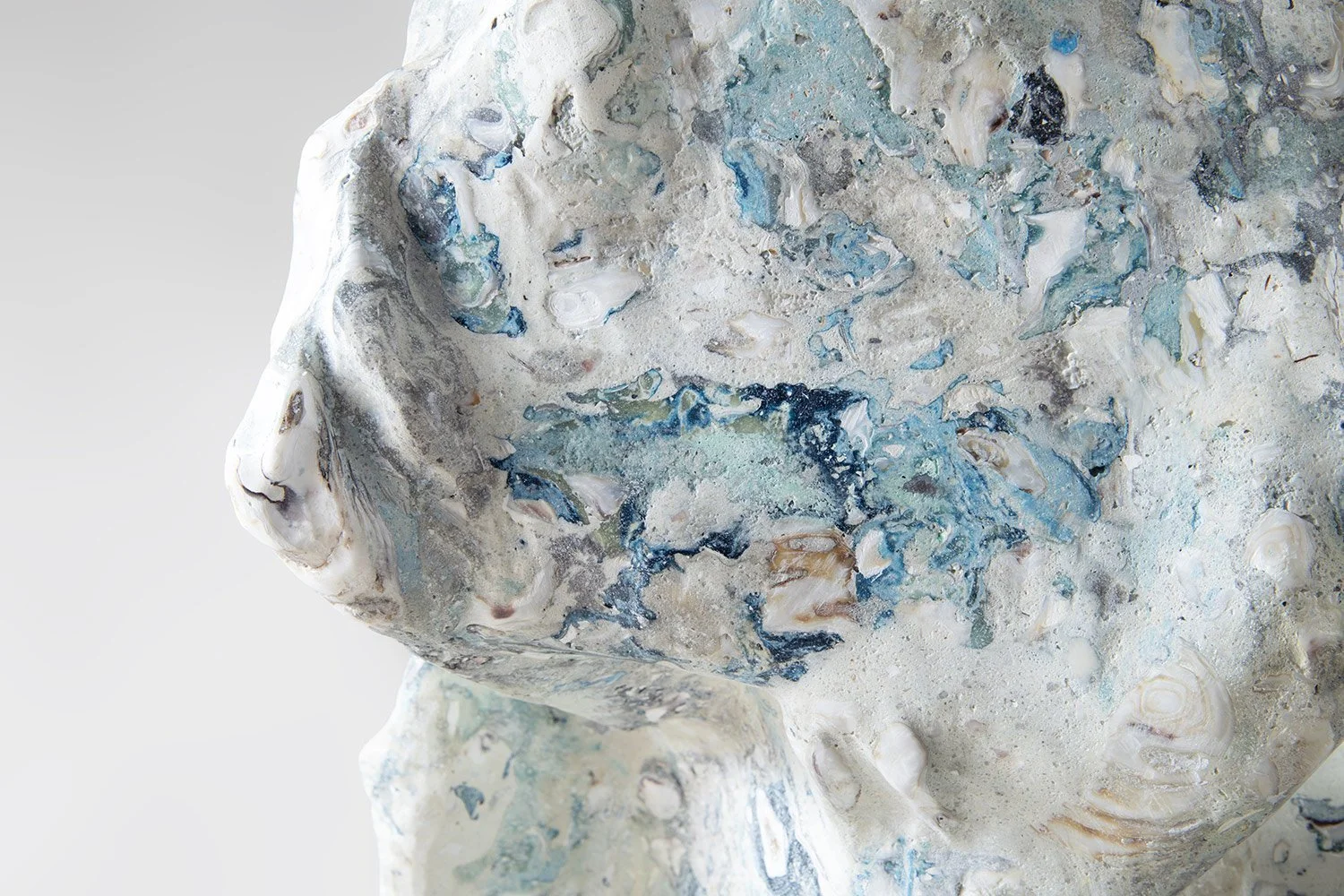
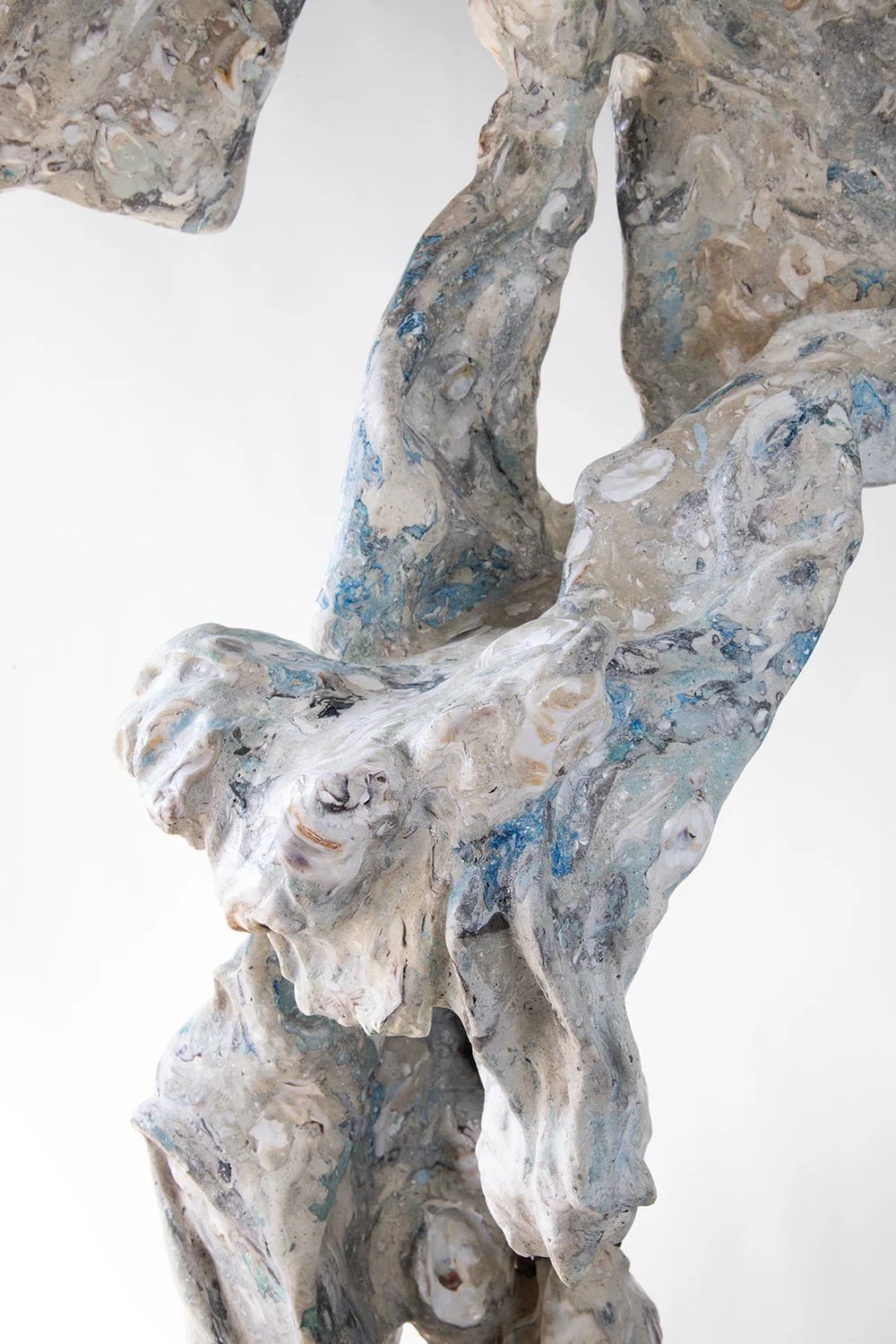
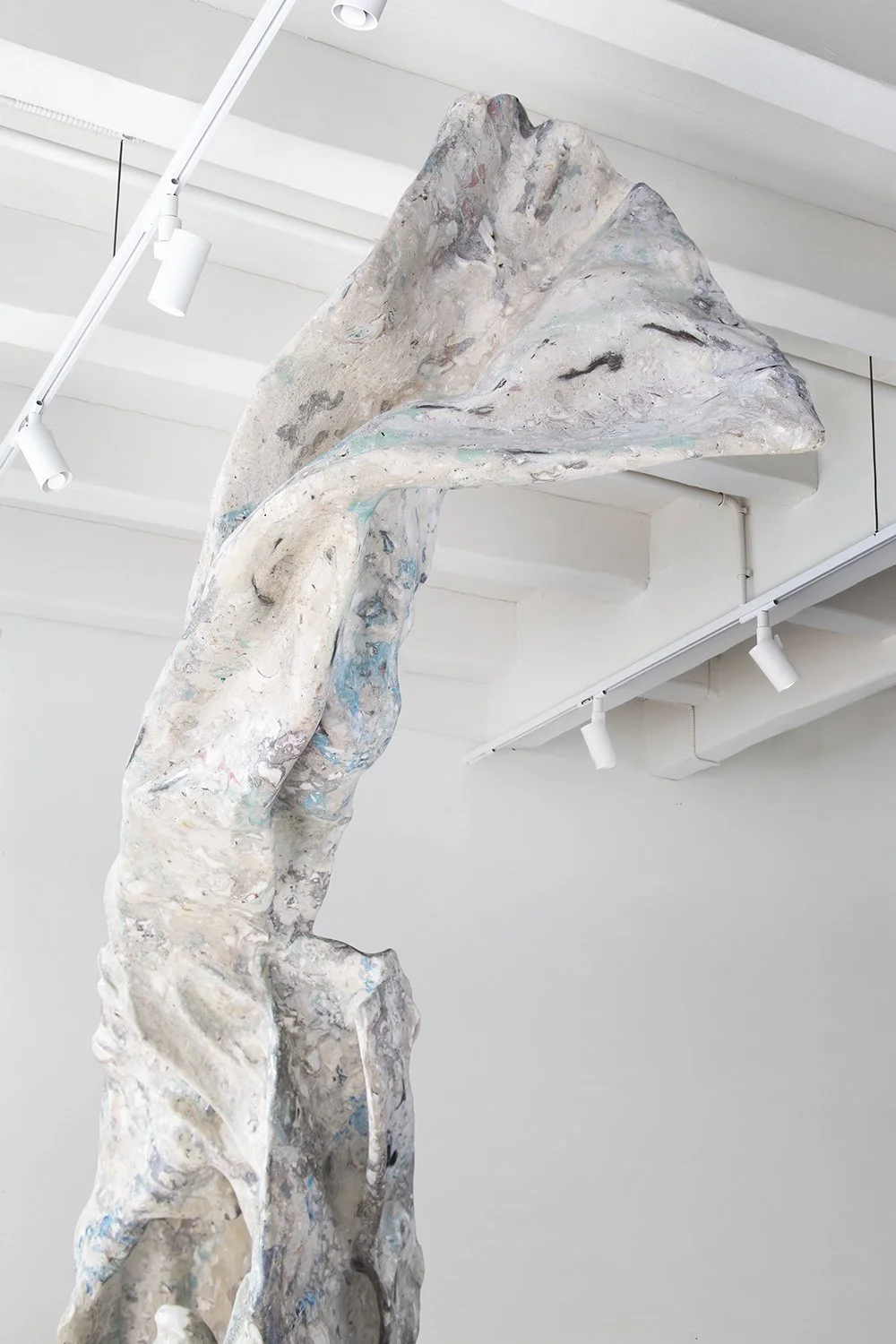
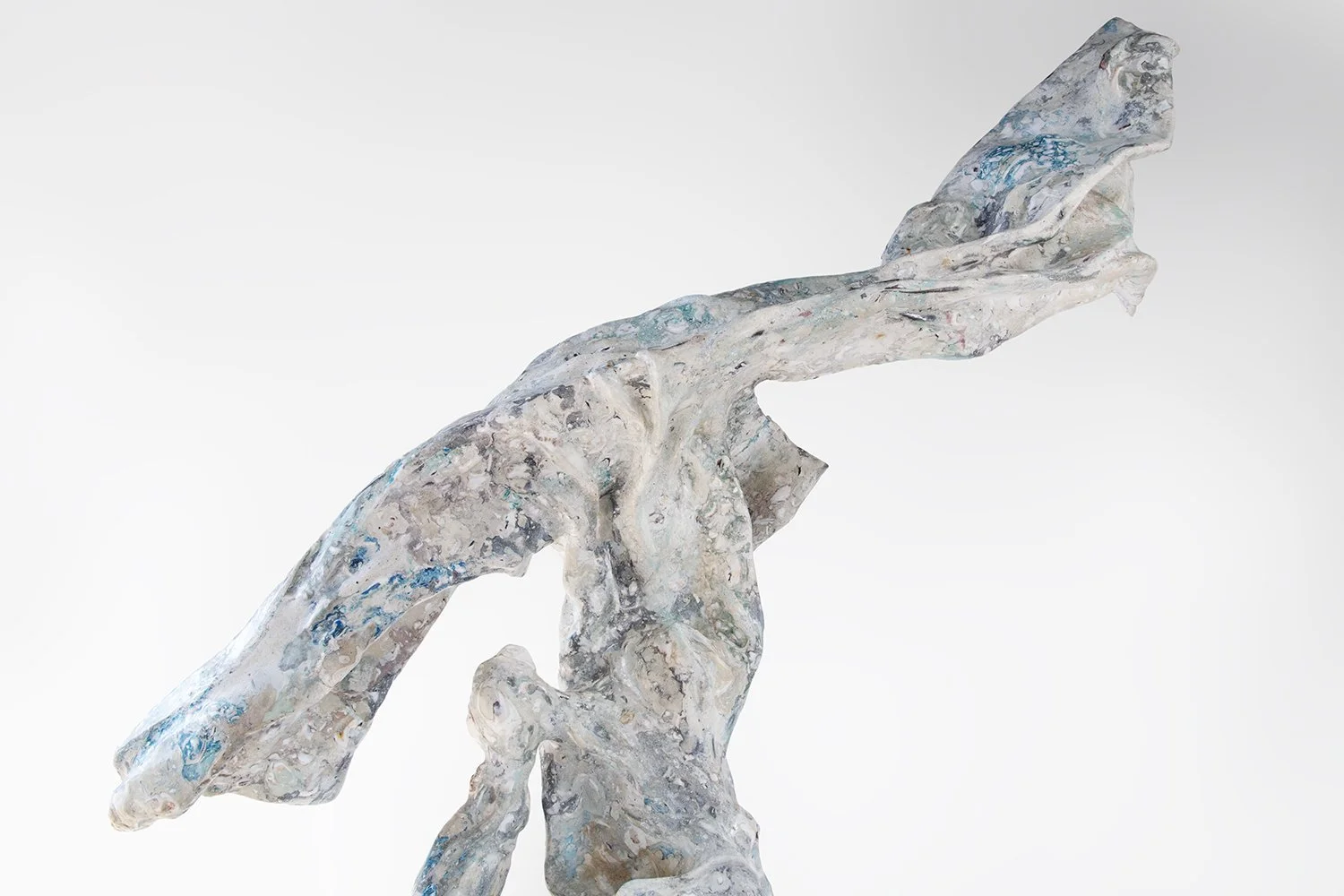
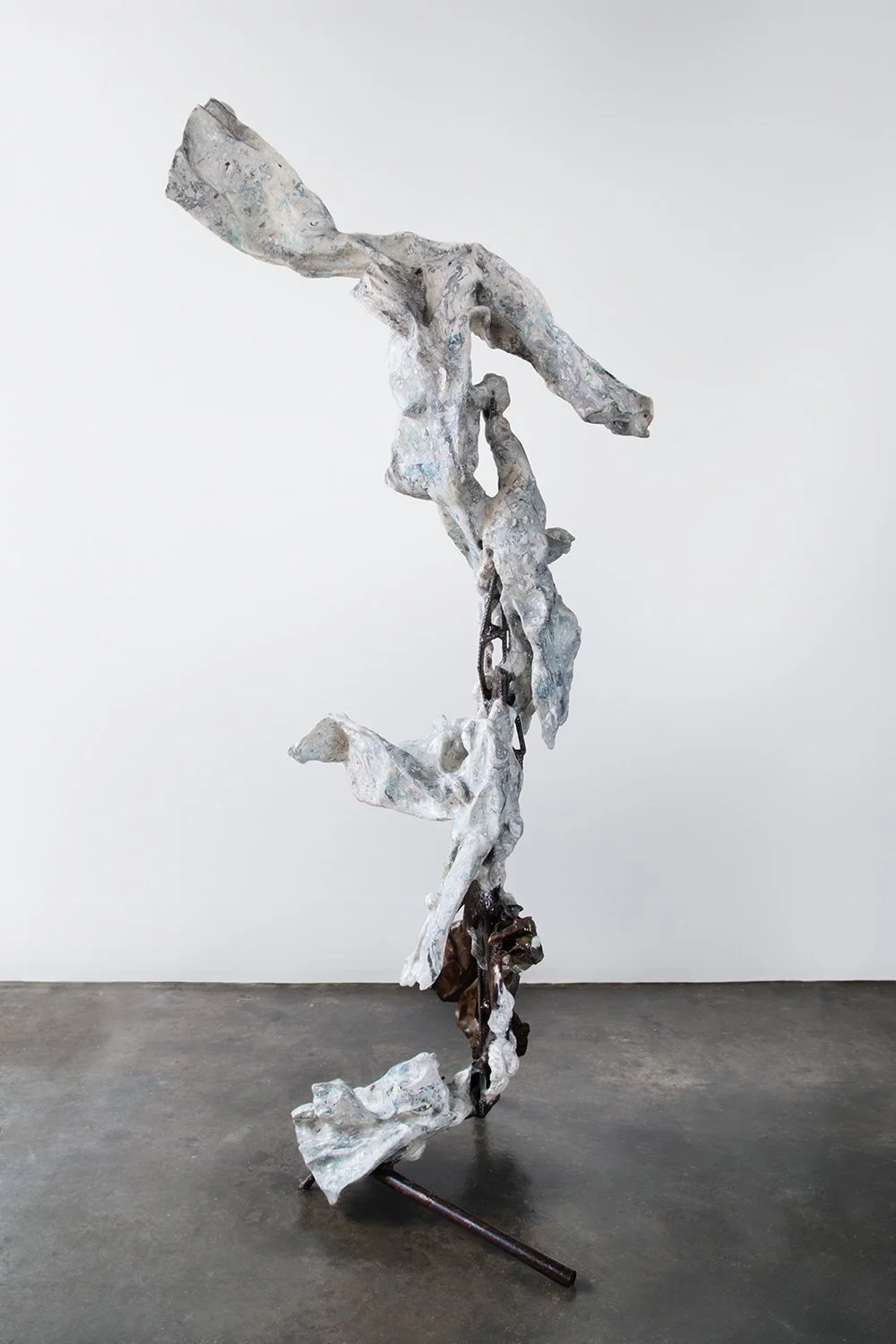
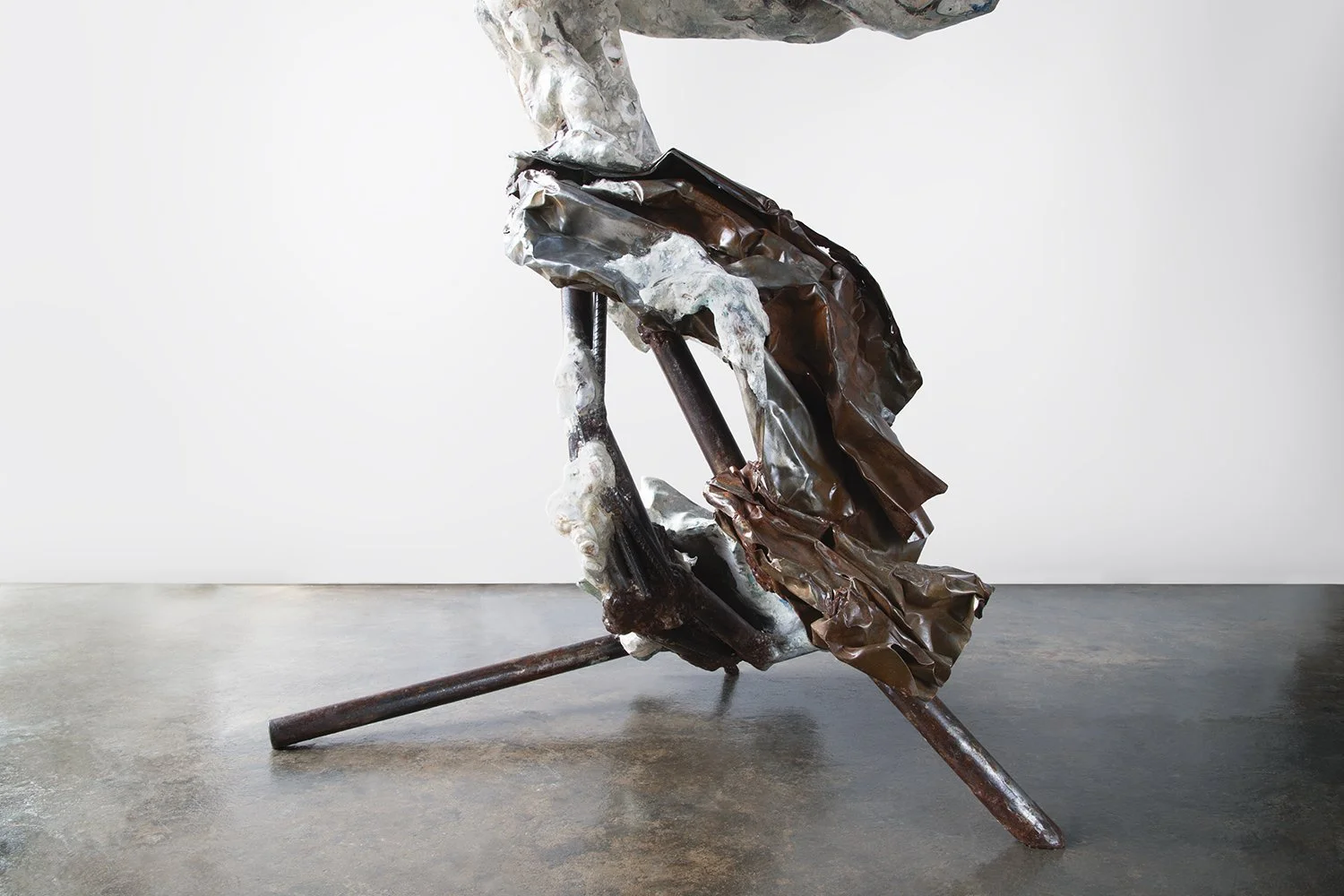
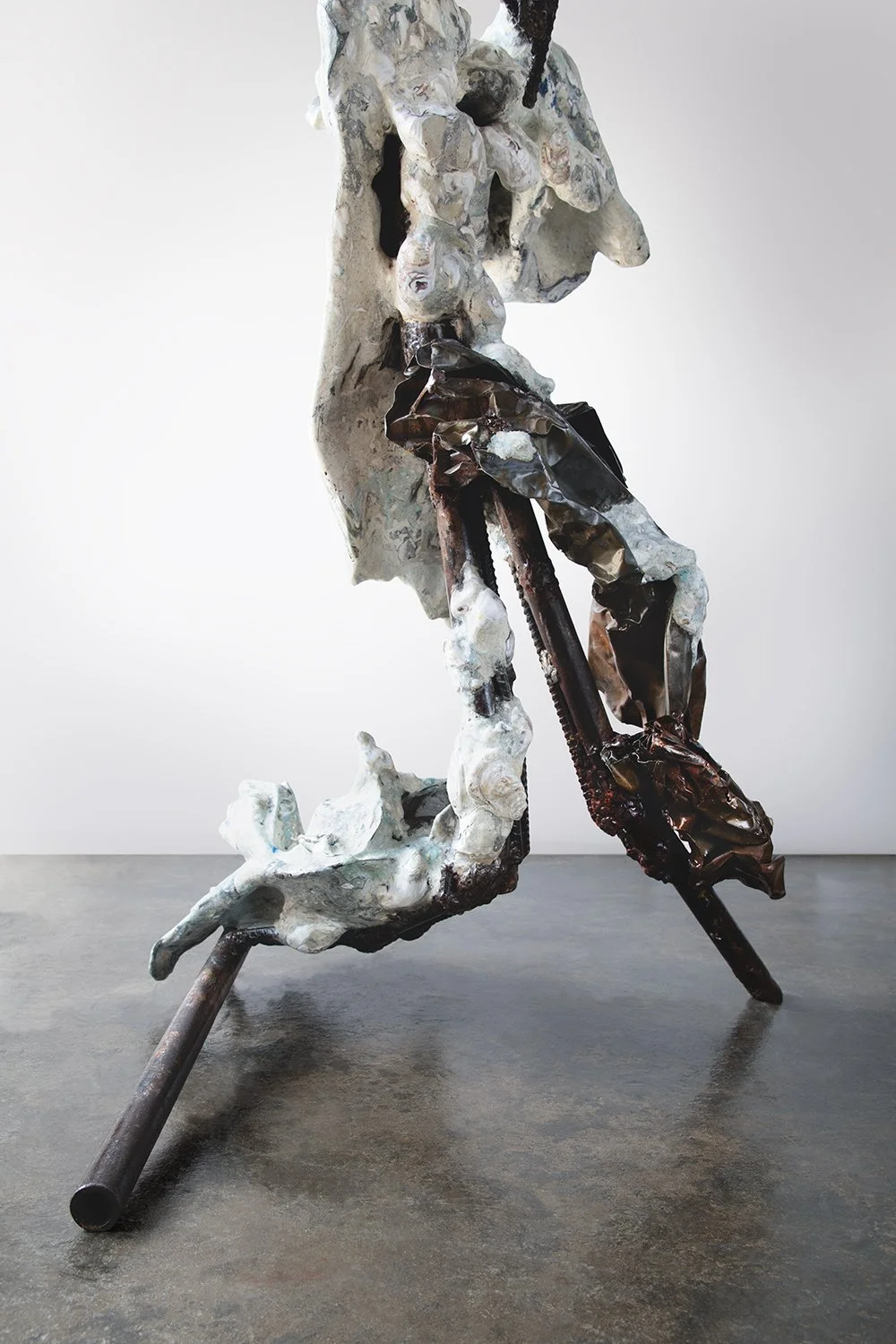
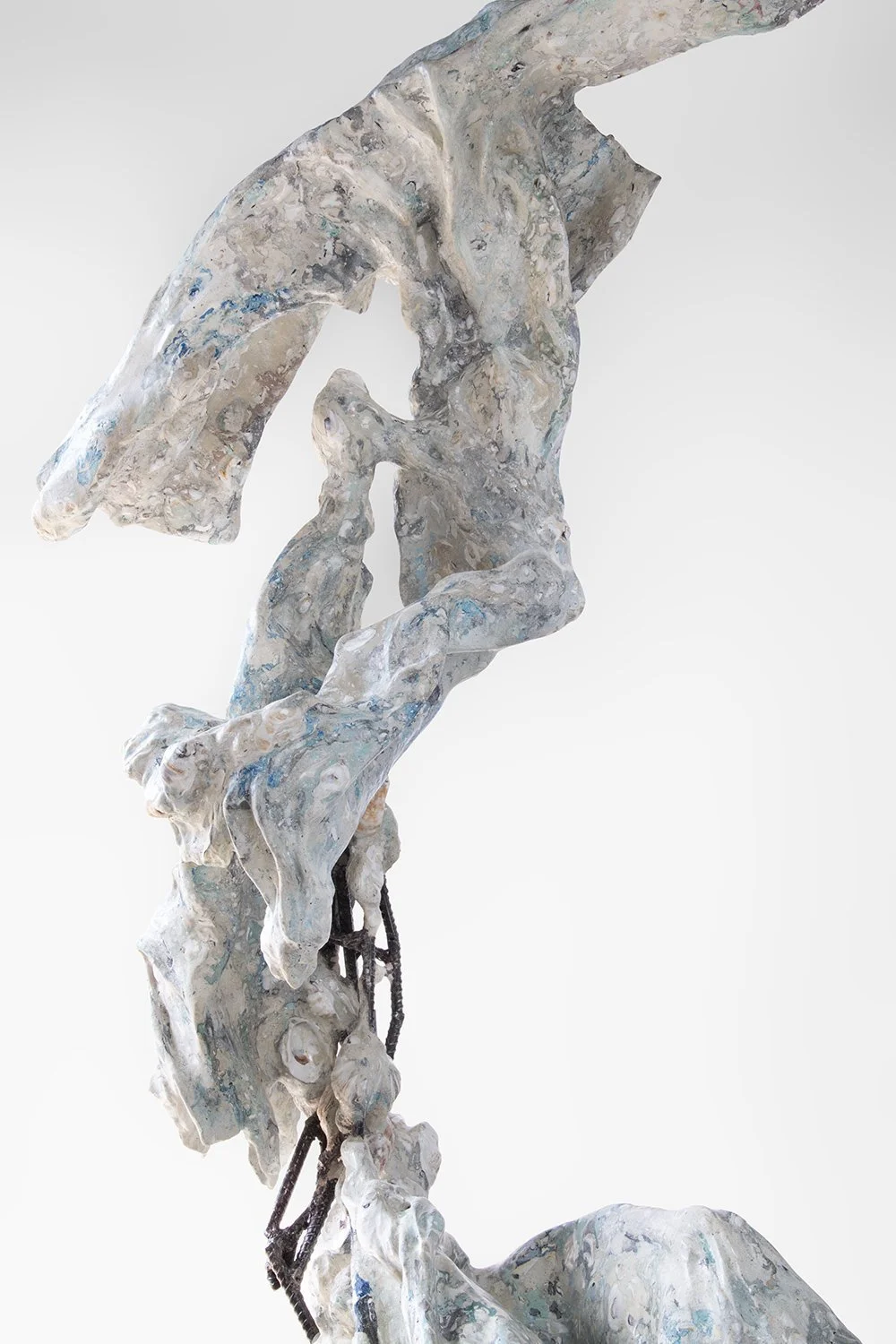
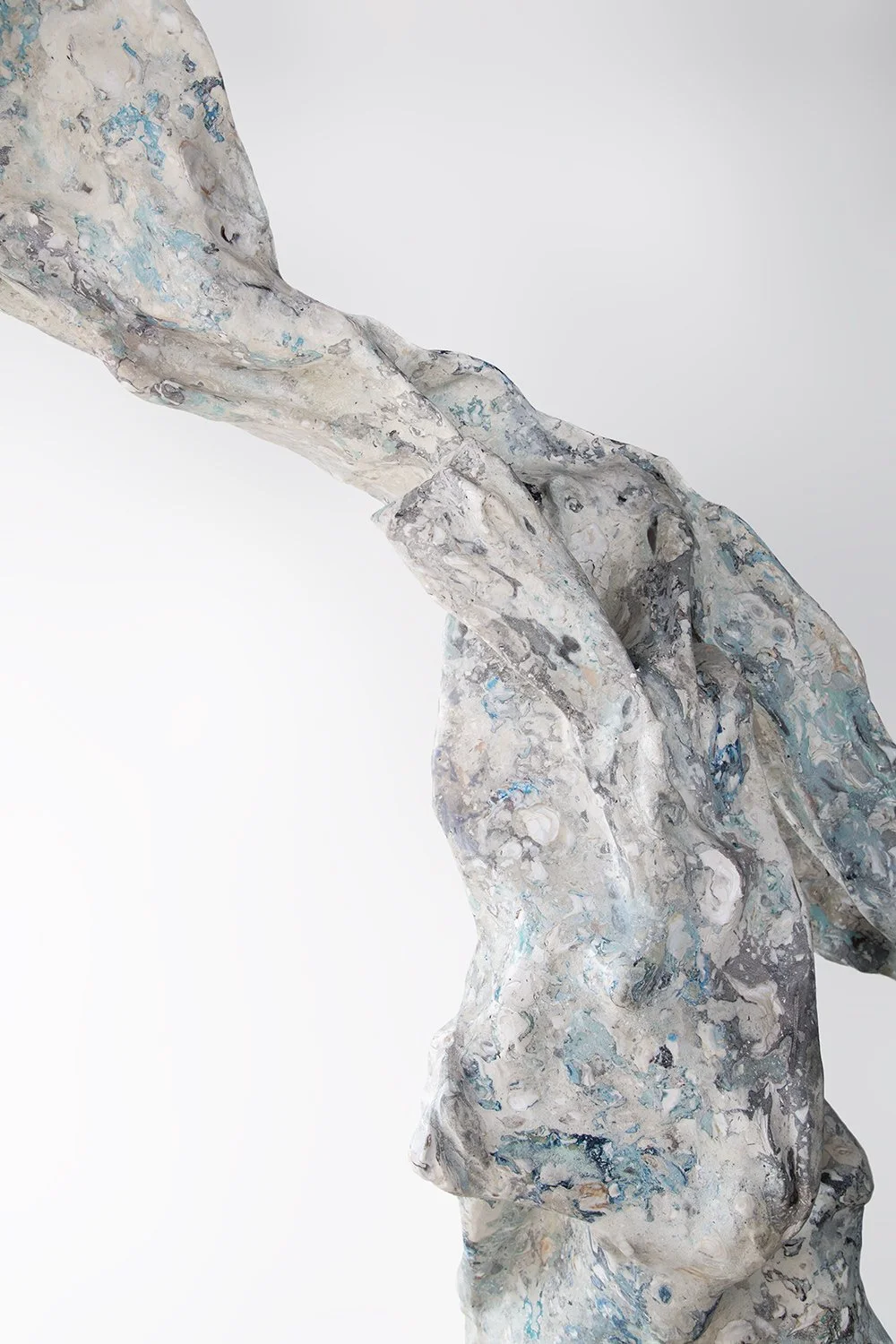
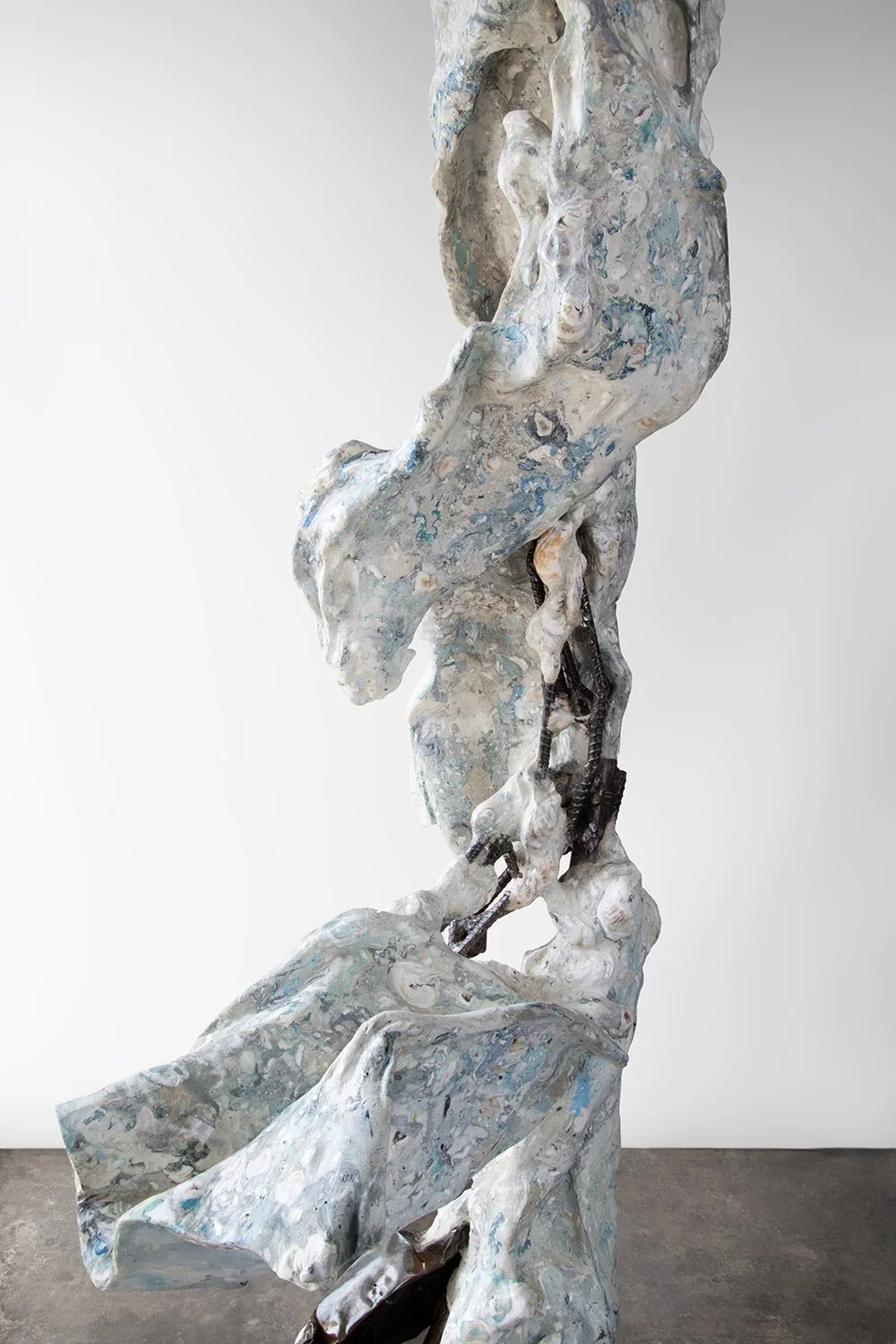
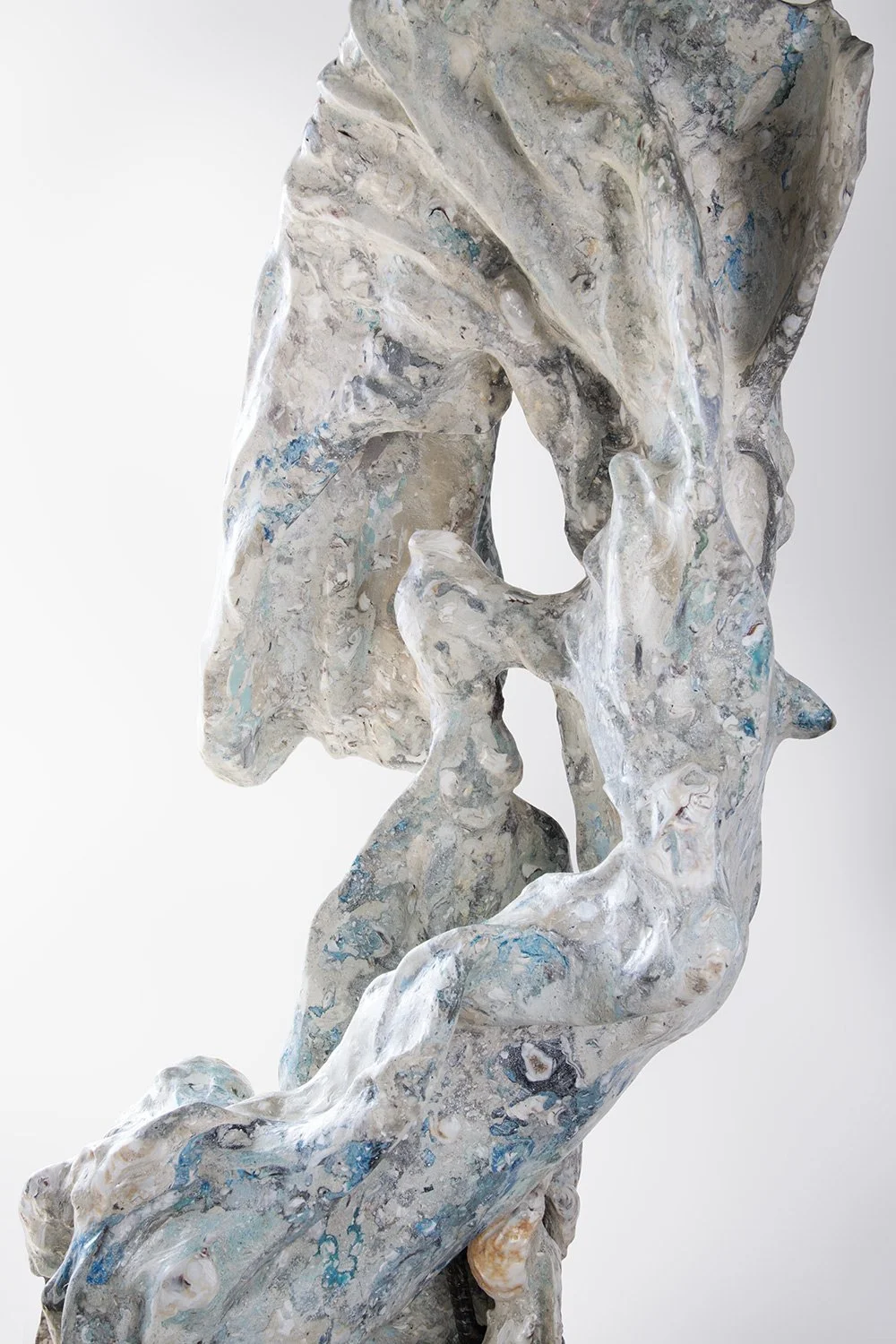
Hydroascendant rises as a singular monolithic form, its entire vertical force surging upward in a complex, twisting trajectory. The reflective surfaces and draping forms create a sense of arrested motion, as if caught mid-flow. The form turns through space in continuous, dynamic tension. Despite the density of its materials, the sculpture carries a surprising weightless quality. Supported by a three-legged armature at the base, the sculpture is built upon a heavily encrusted, highly polished prima materia body composed exclusively of oyster shells and marble, forming white, gray, and blue-toned accretions. Carved through classical subtractive techniques, these materials are shaped into a towering fluidity of bone-like structures and wind-flexed drape forms, finished with a highly polished, luminescent lithoid surface. The three-legged stance and draping language continue a concern first explored in Wind (2016).
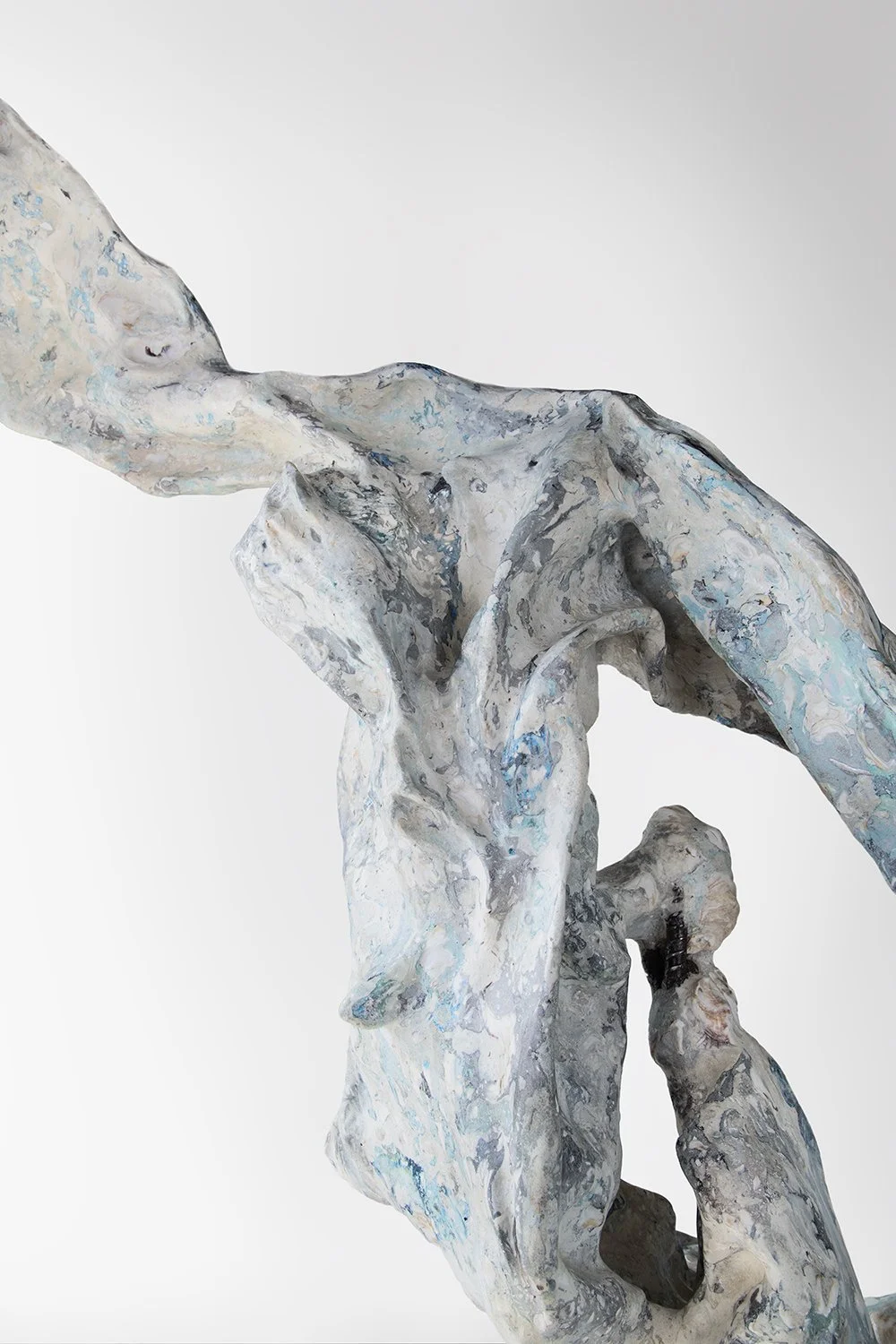
From one view, Hydroascendant seems to resolve into a narrow vertical body. A few steps around it, a large opening becomes visible and the upper form reads as a broad arch. Moving again, that arch almost disappears as the same mass extends into a long diagonal sweep. The object has not moved. Yet its main structure seems to have changed. The object has not moved, yet what first appeared structurally primary can recede or take on another role from the next position.
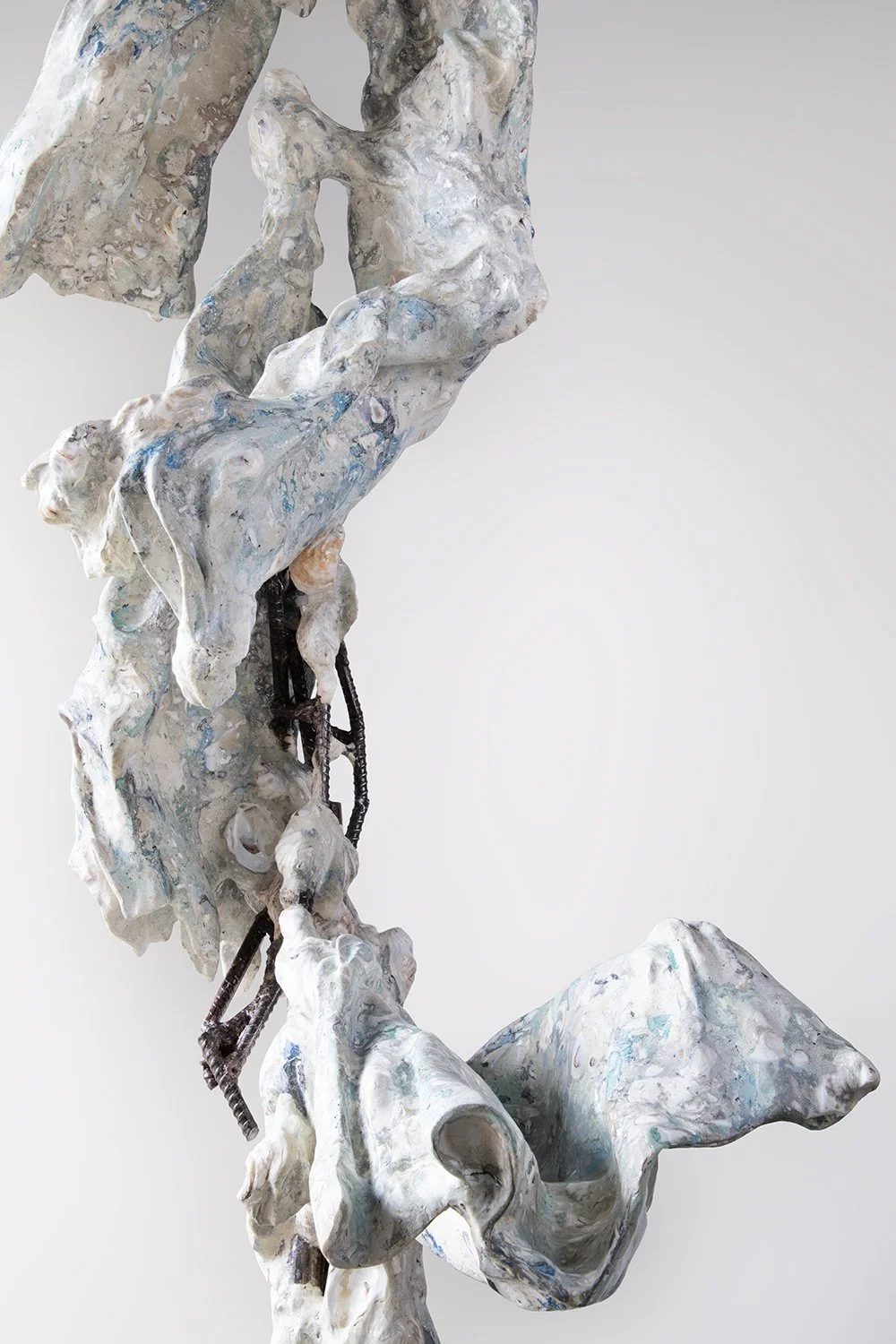
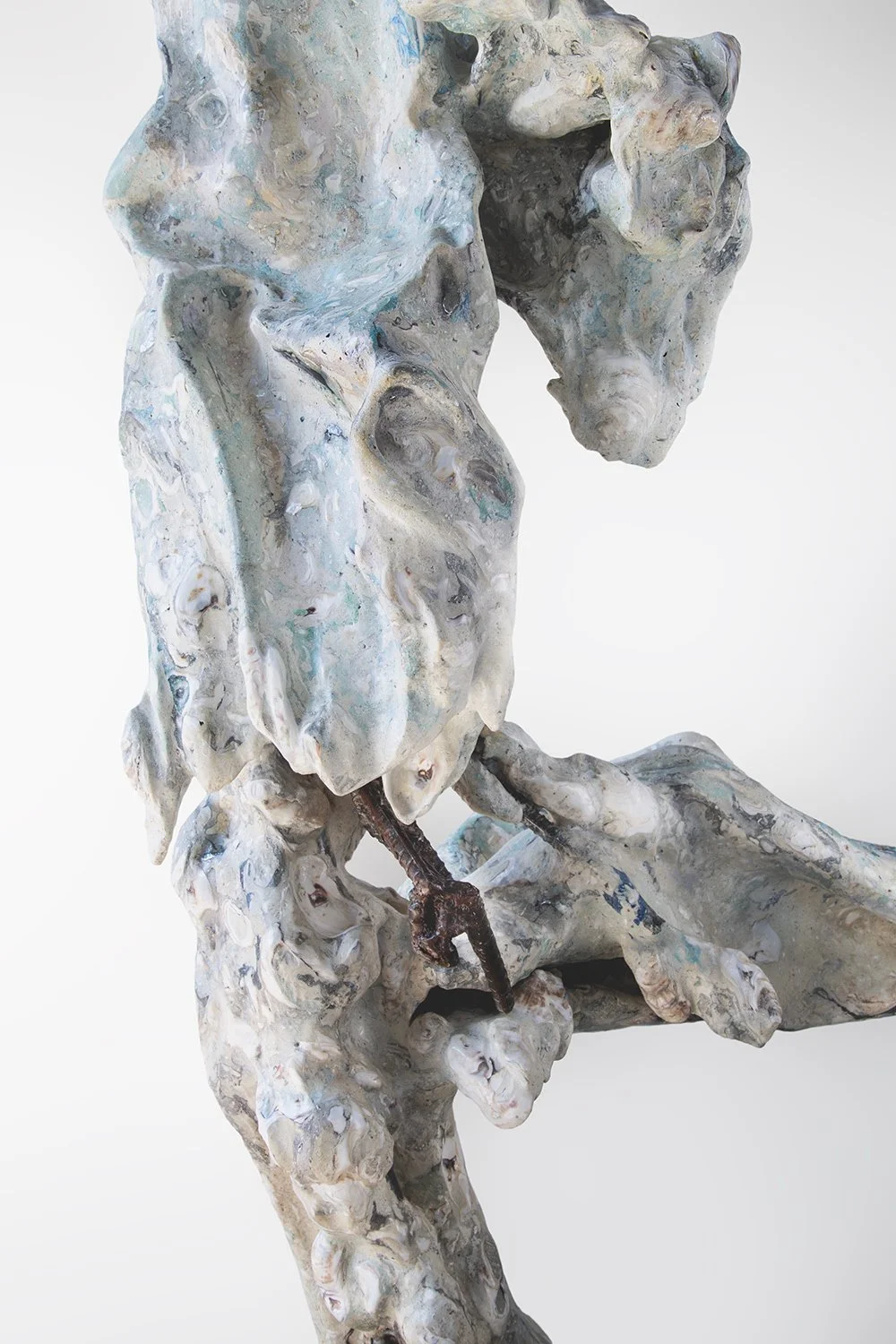
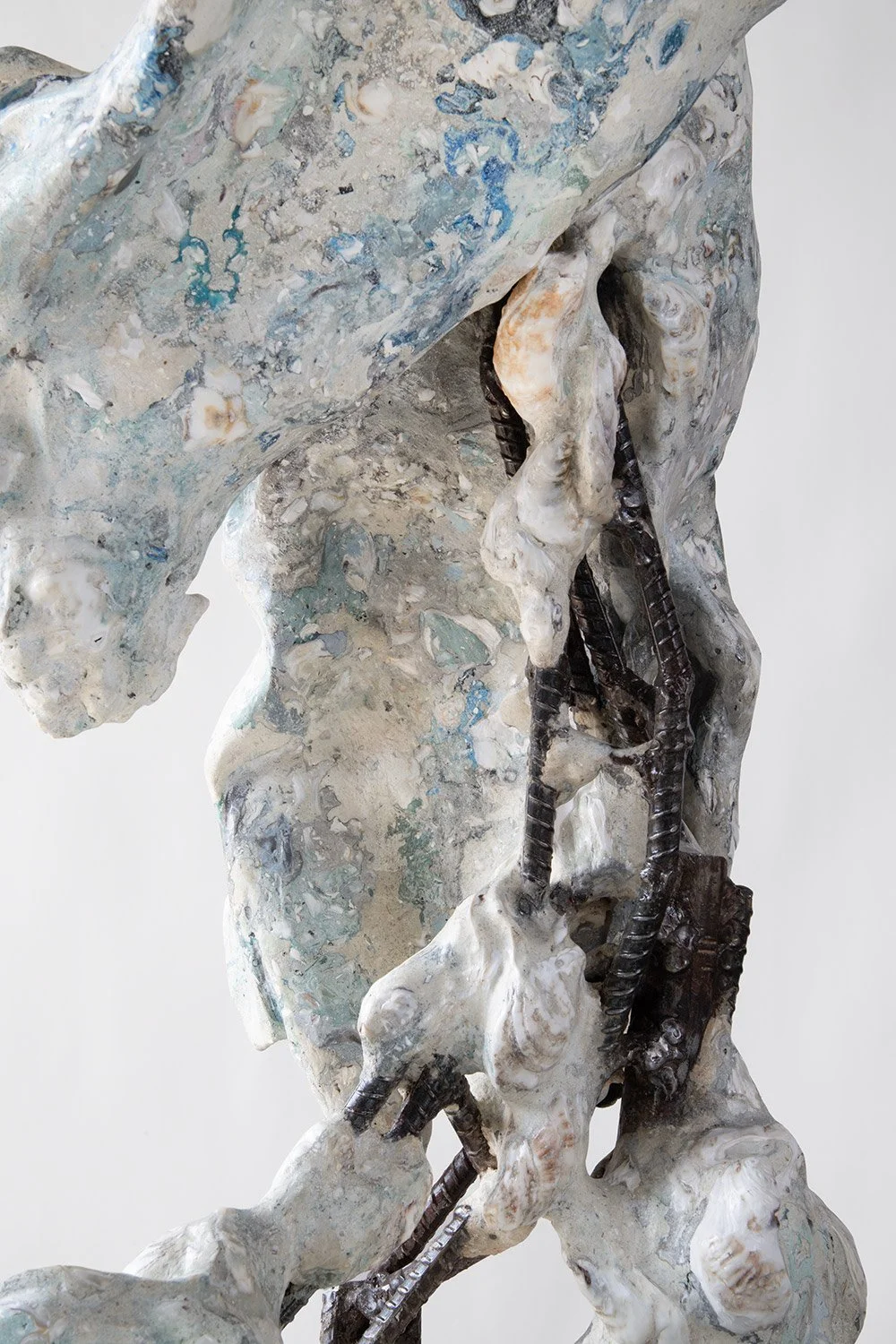
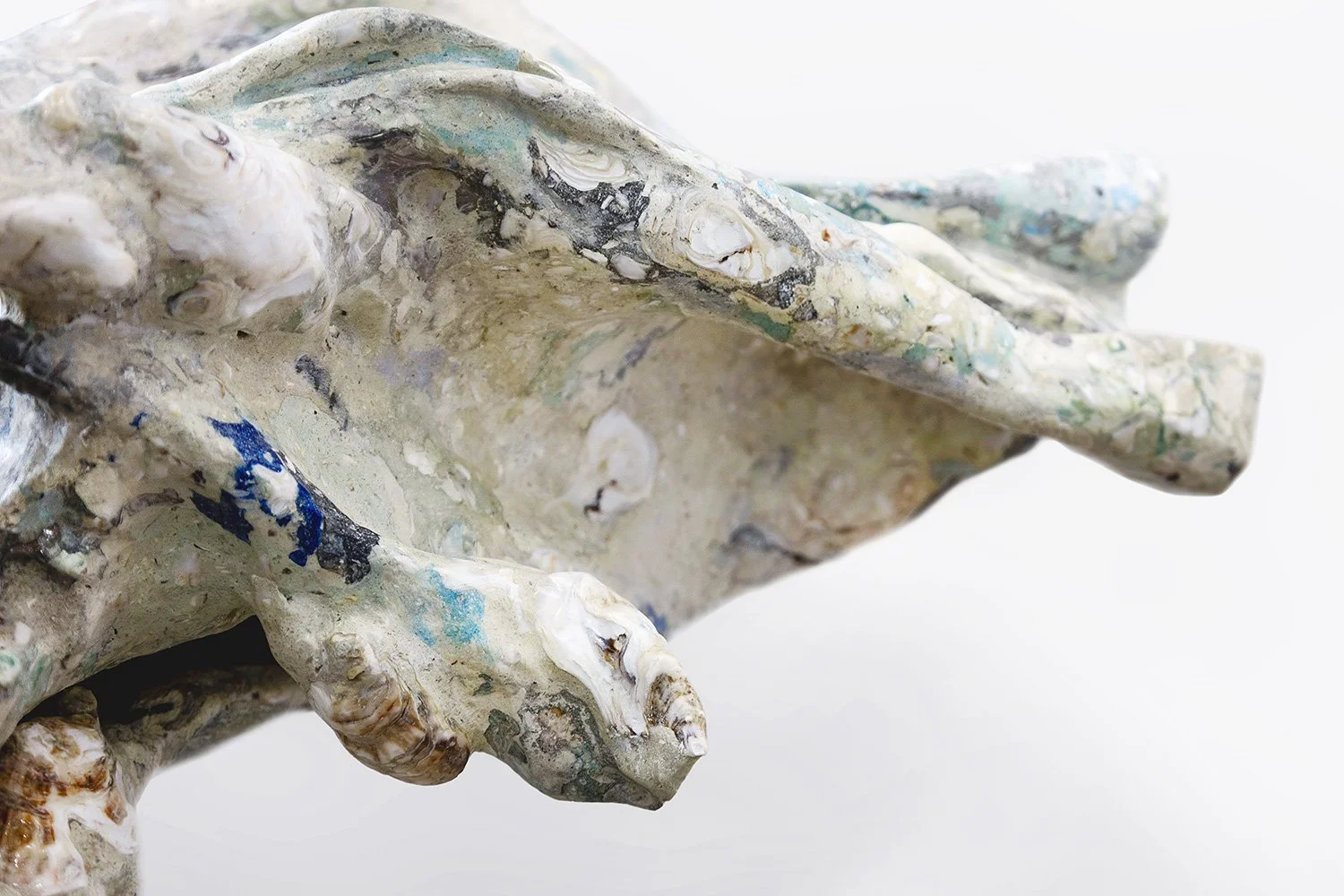
These oyster clusters undergo constant, subtle shifts in the perception of color, moving between gray-pinkish beige and cyan in response to the temperature of light. The color spectrum remains elusive and glowing as it travels along the vertical form.
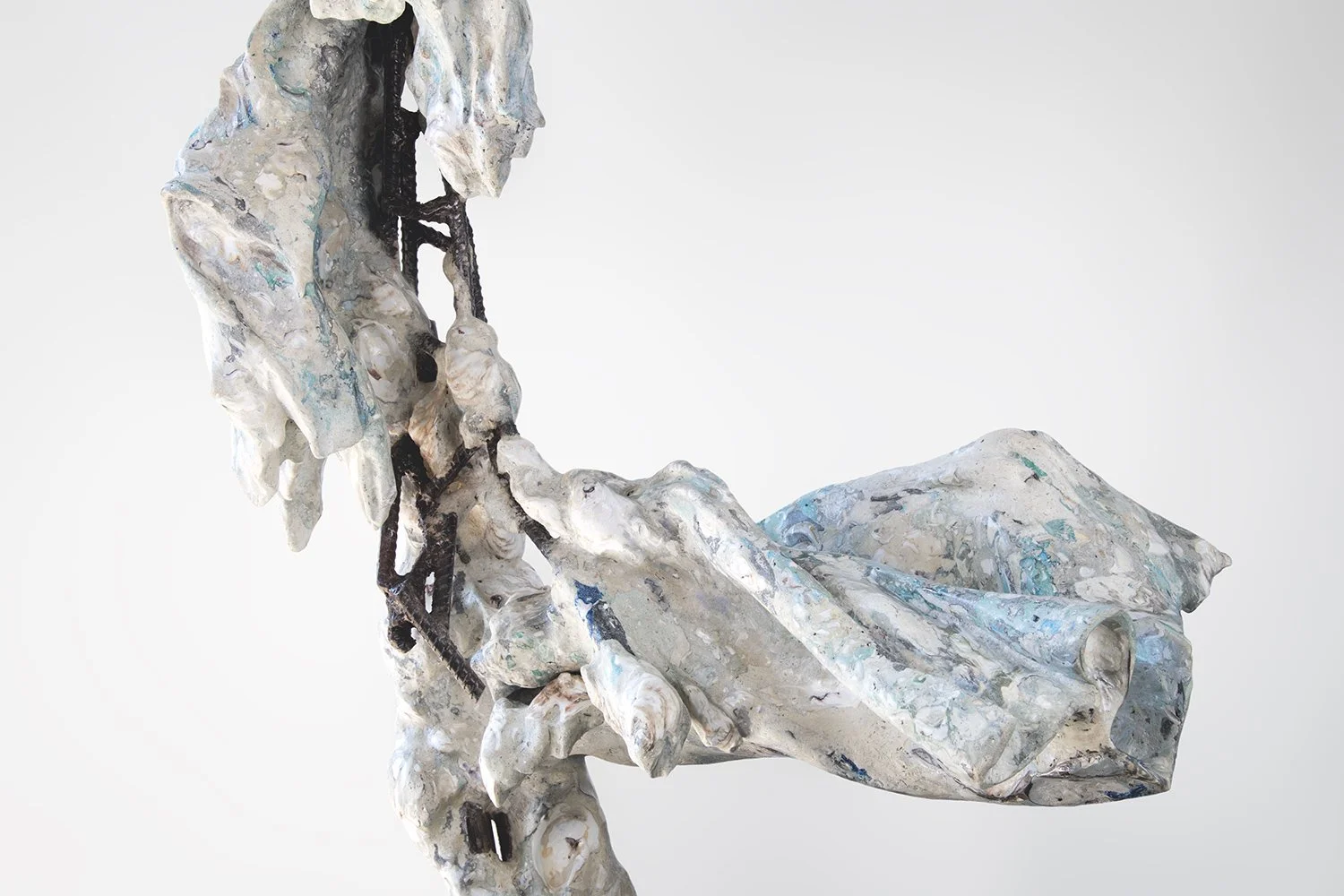
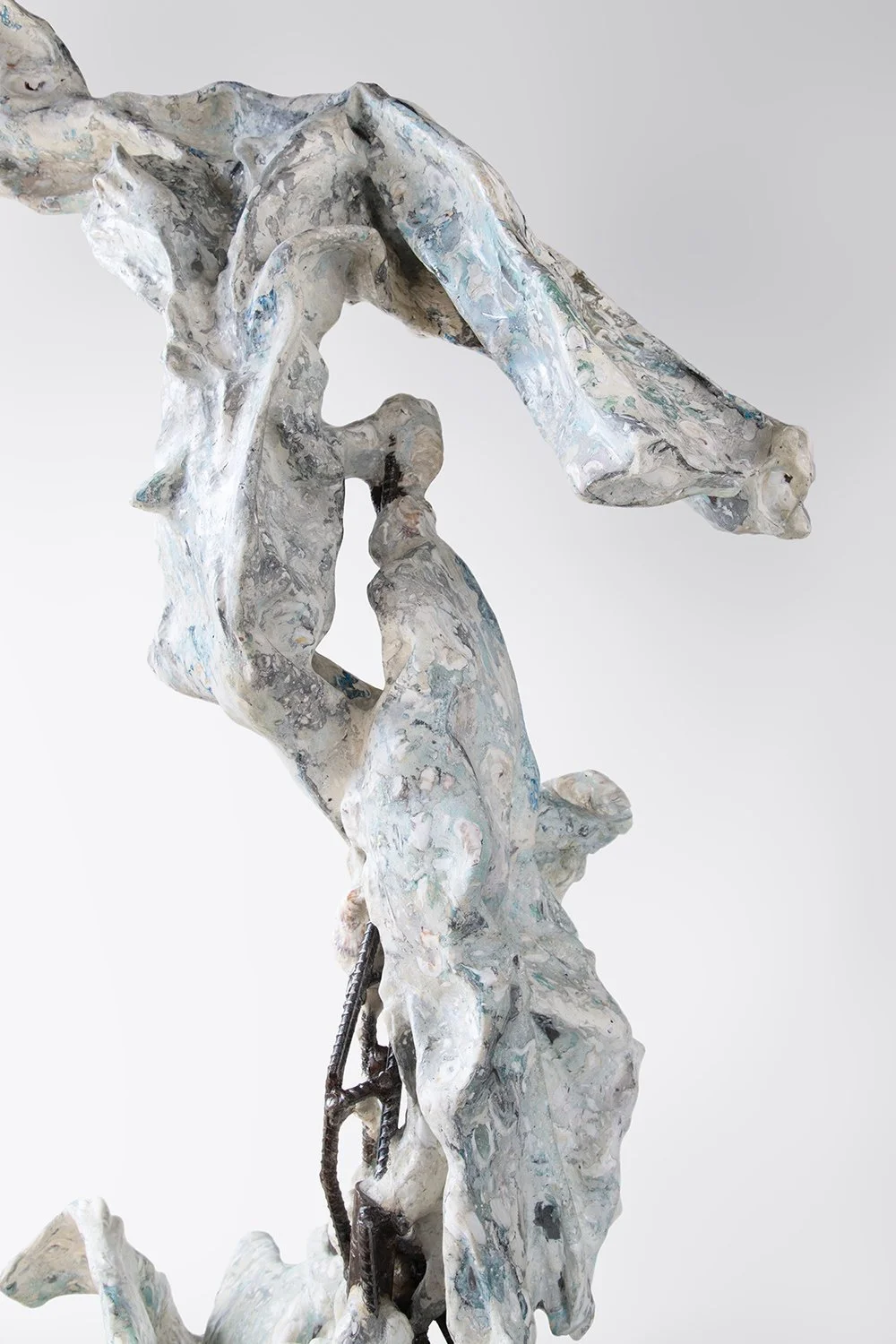
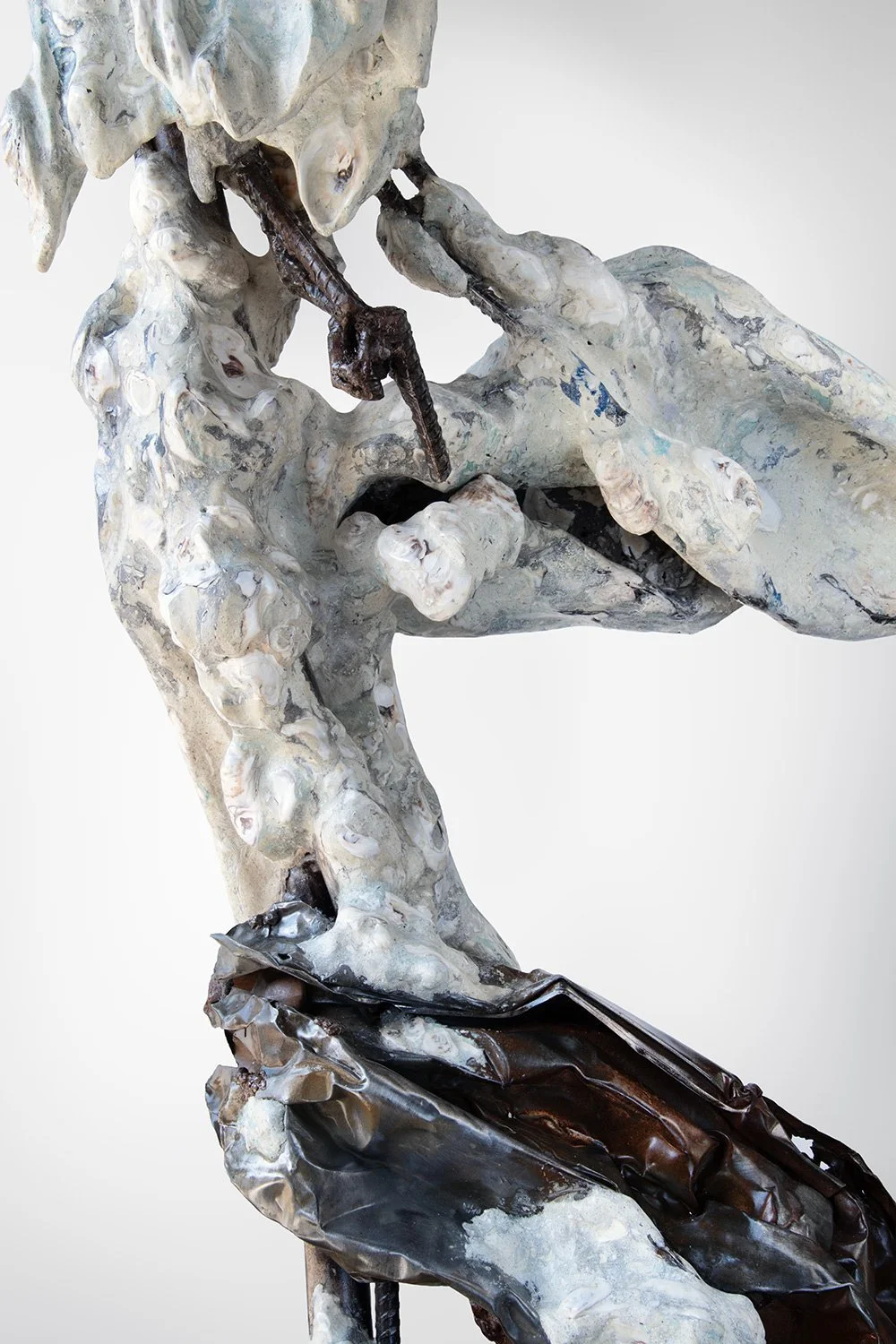
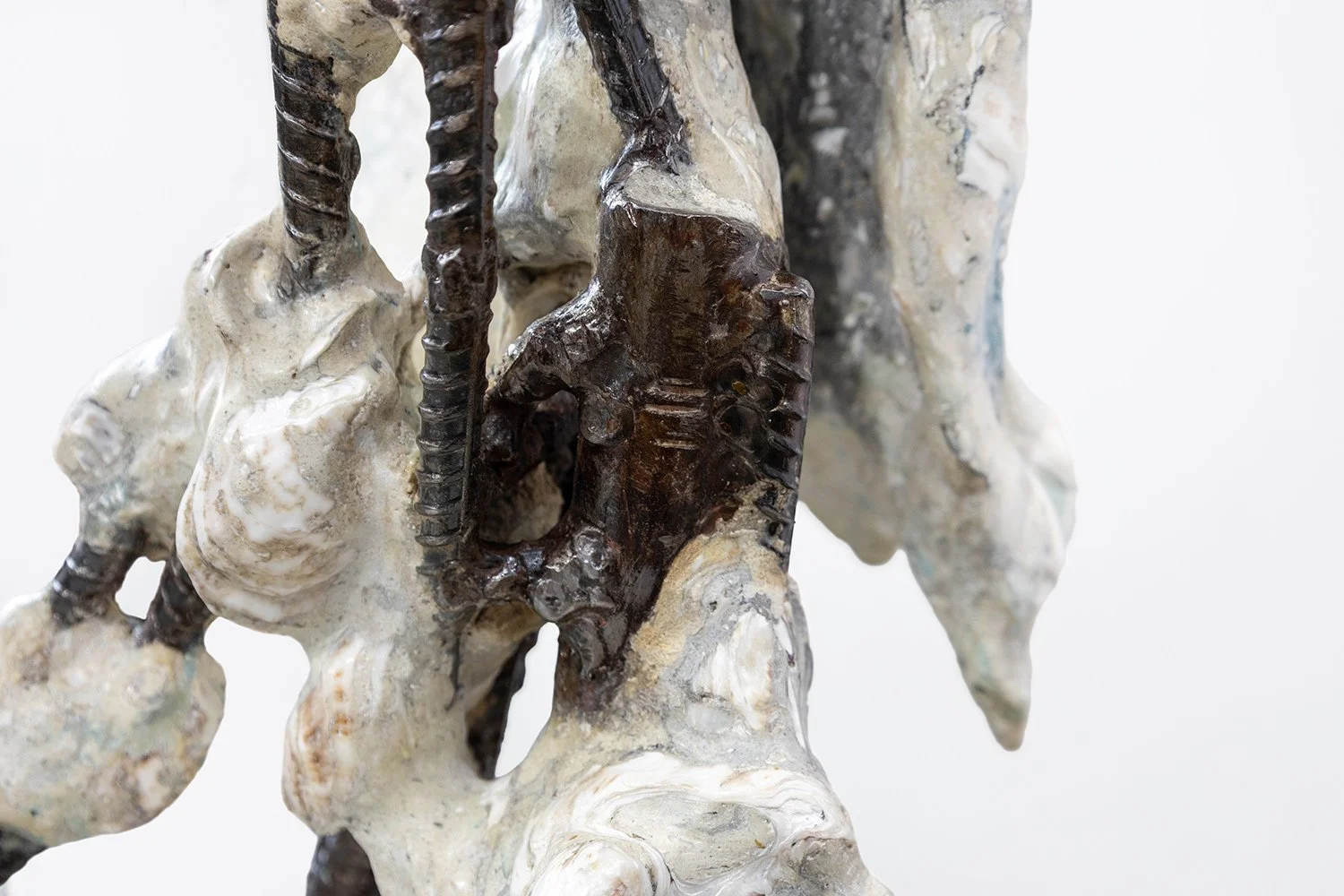
At human eye level, residual oyster forms remain partially intact, their original shell contours left visible in varying degrees. These clearer shells appear to slip and cascade downward along an exposed lattice of twisted, rusted rebar and pipes, creating a dense interweaving of mineral and metal. The residual forms carry a sense of melting and continued vertical flow that links the upper and lower sections of the sculpture.
Rebar and steel rods extend from the mass, creating sharp linear accents that contrast with the dense, carved organic form. The work balances raw material weight with structural tension, as if caught in a moment of upward propulsion. Toward the lower section, the same draping language continues, but the white and gray mineral surface gives way to forged rusted steel. This continuity of form allows the sculpture to dissolve the usual awareness of a base, so that the invisible three-legged contact with the ground itself becomes less significant and the ascent appears to rise without clear termination.