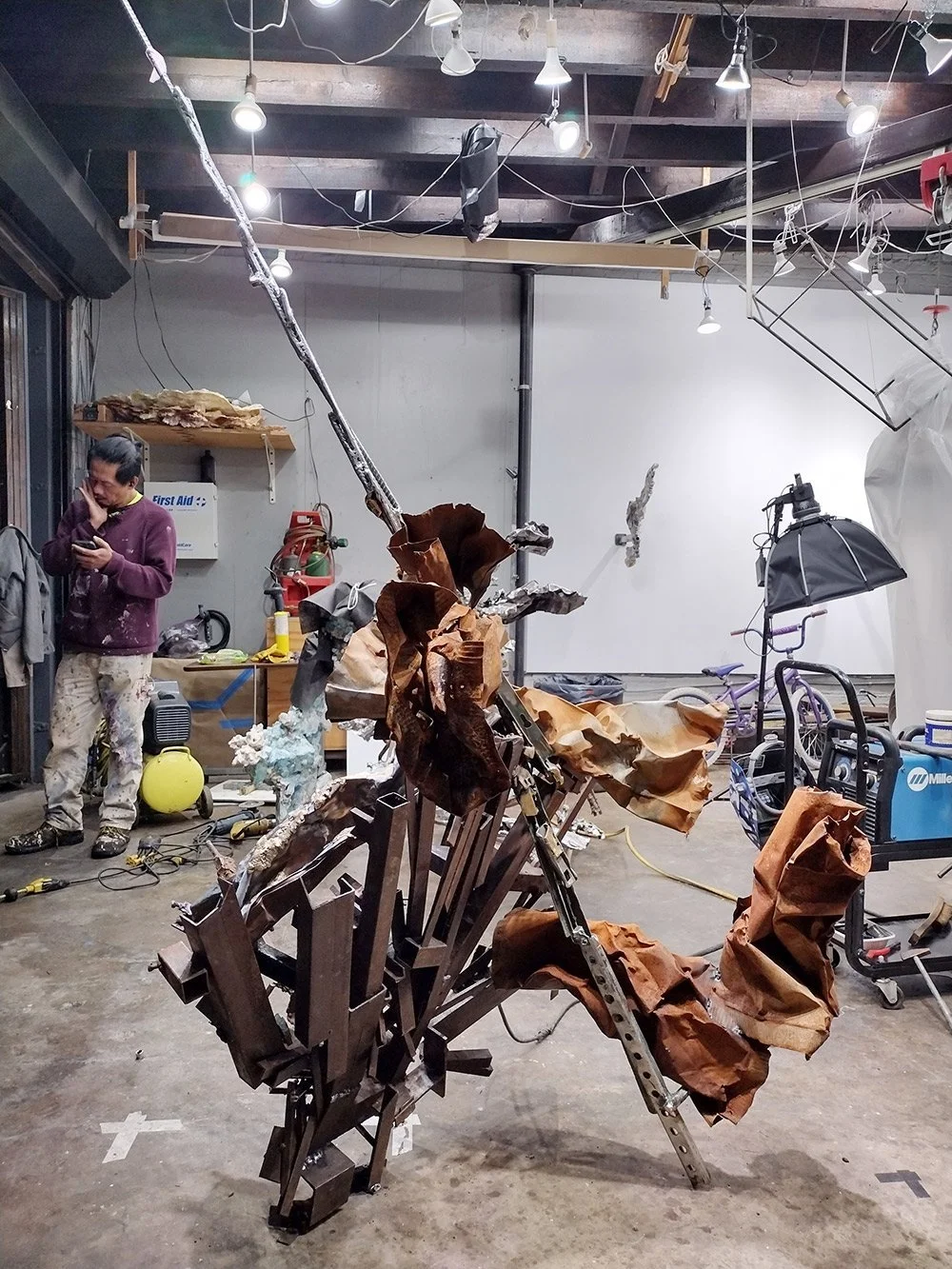
Depraved Hydration (unfinished)
2027
H80 × 48 × 56 in
H203 × 122 × 142 cm
Steel, bronze, brass, verdigris
Work in progress…
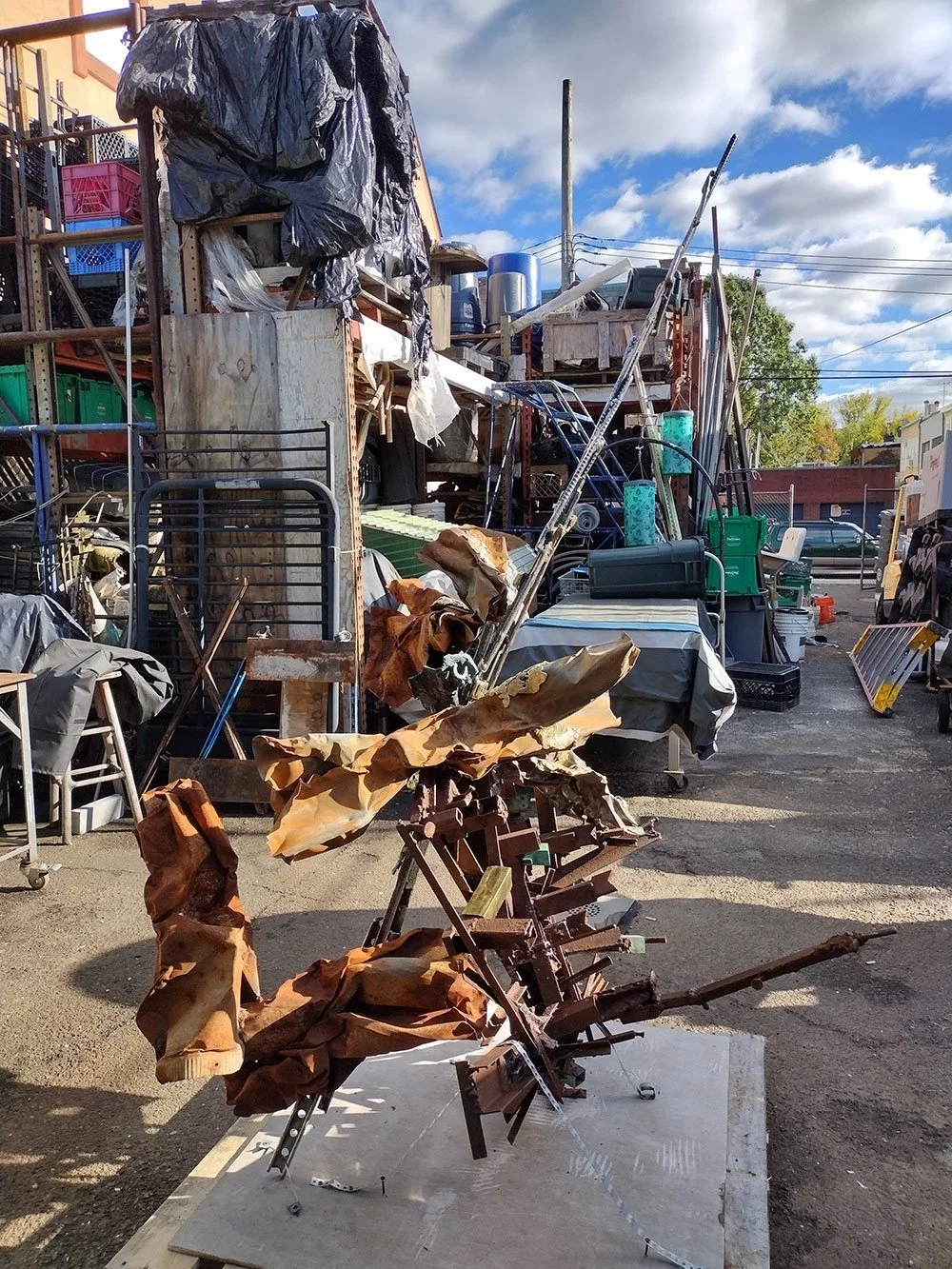
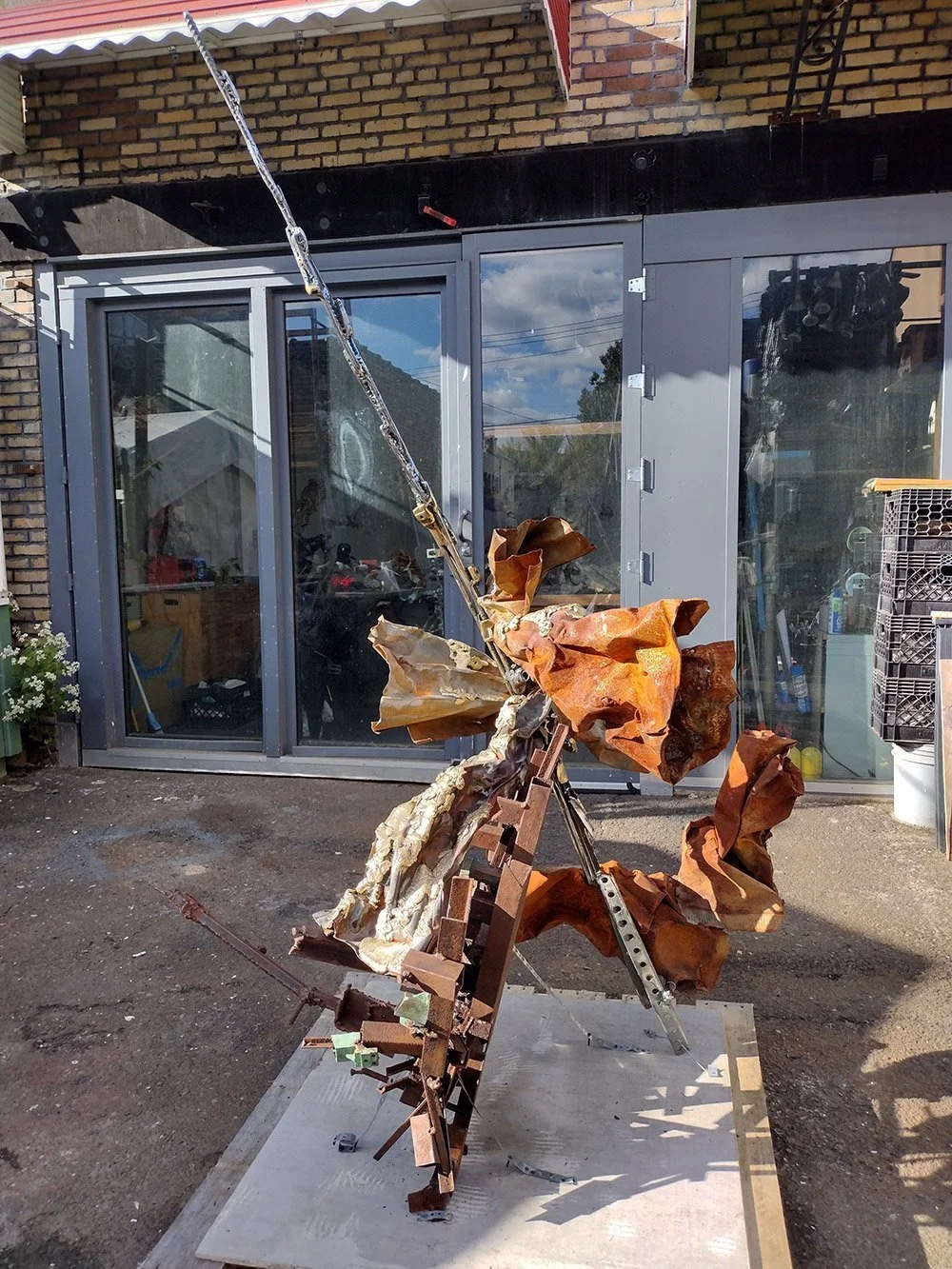
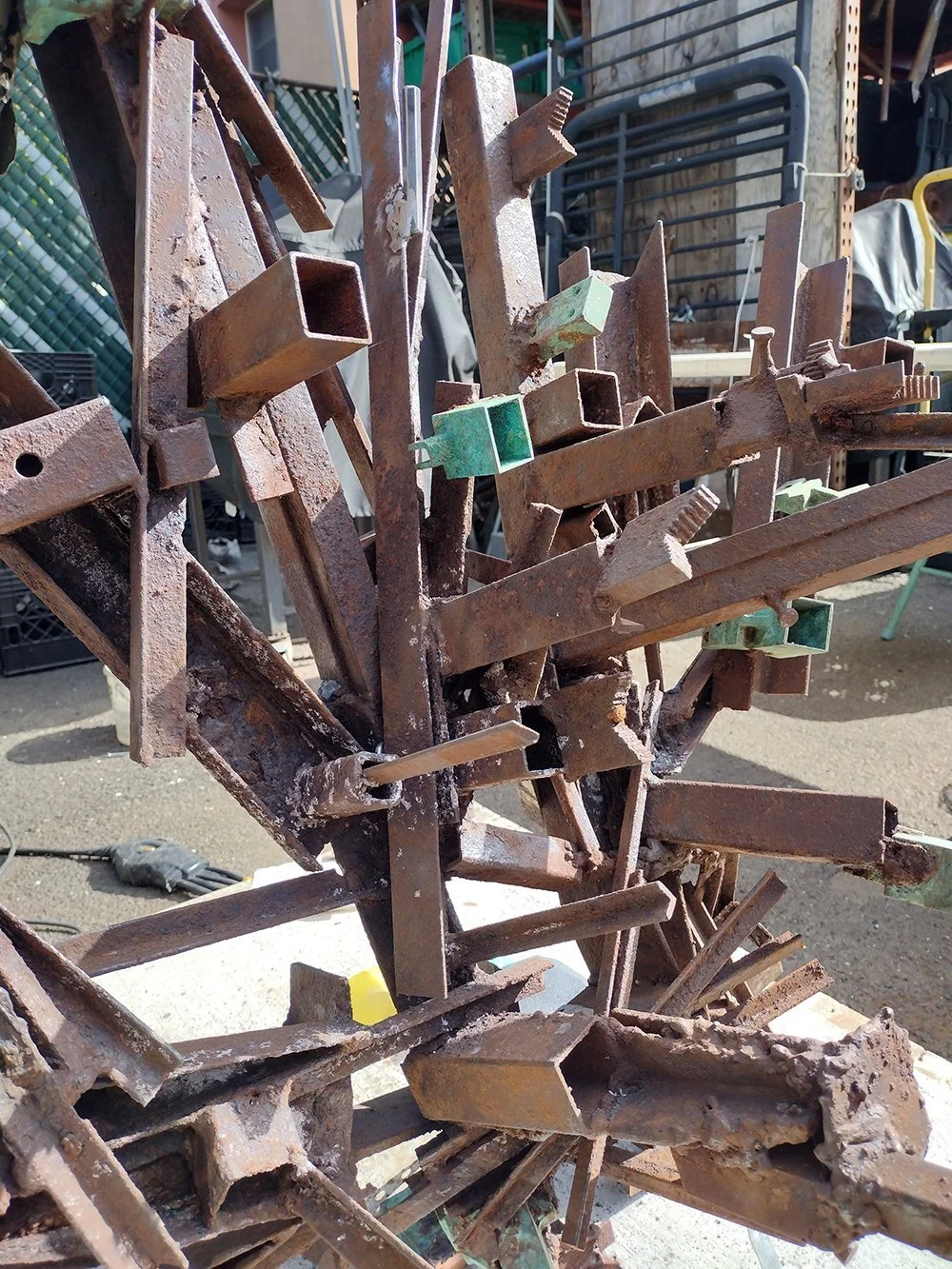
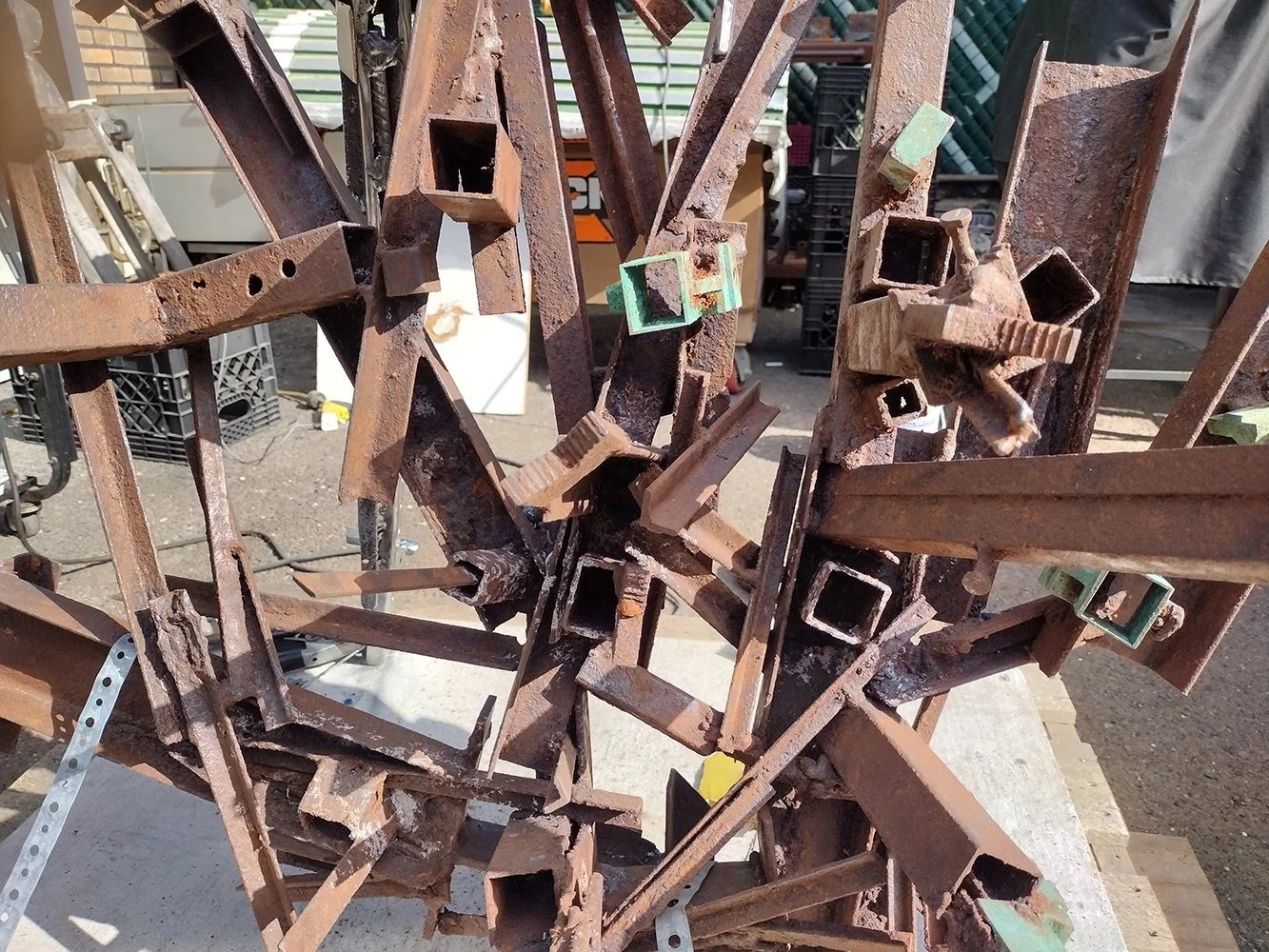
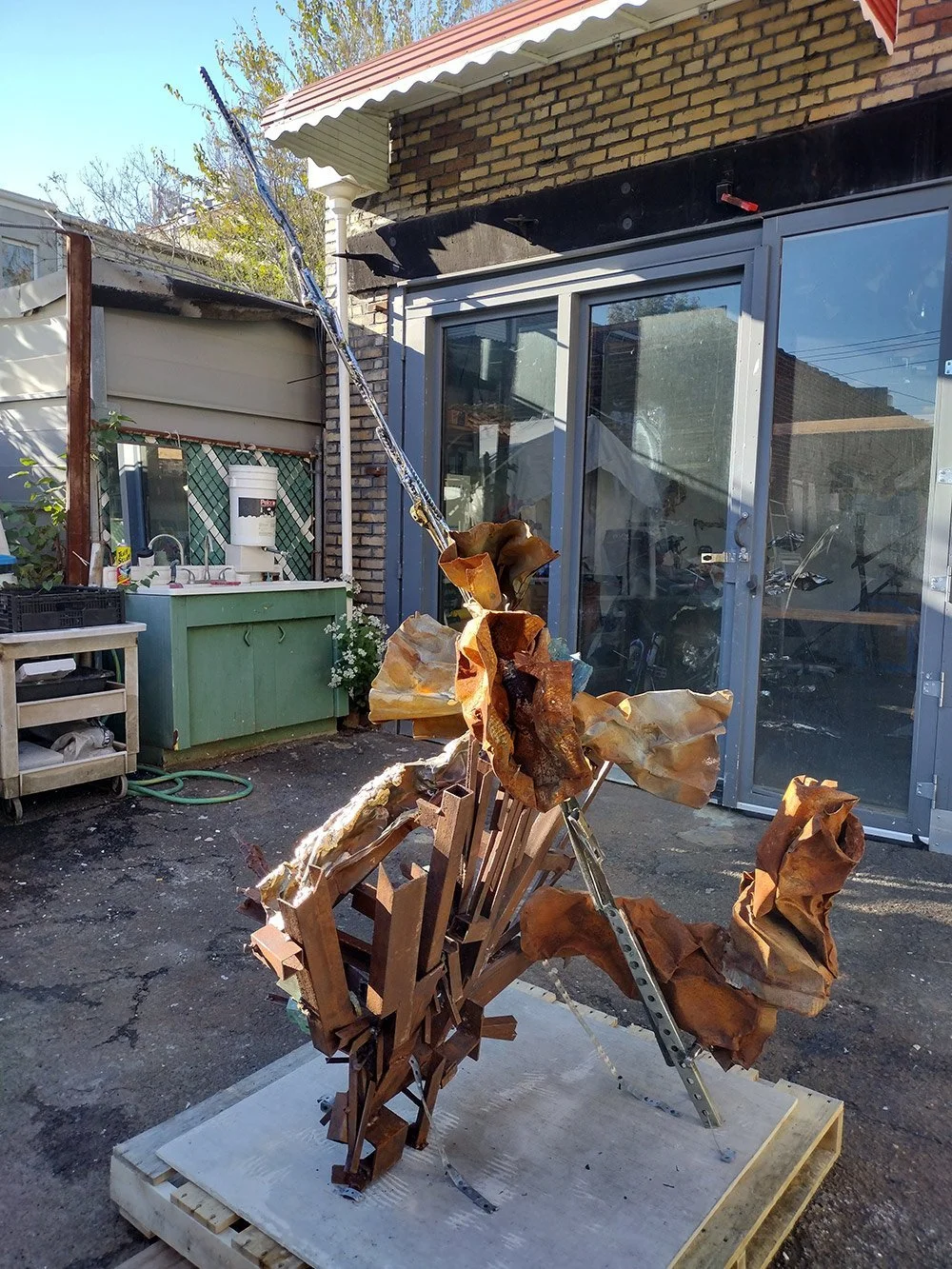
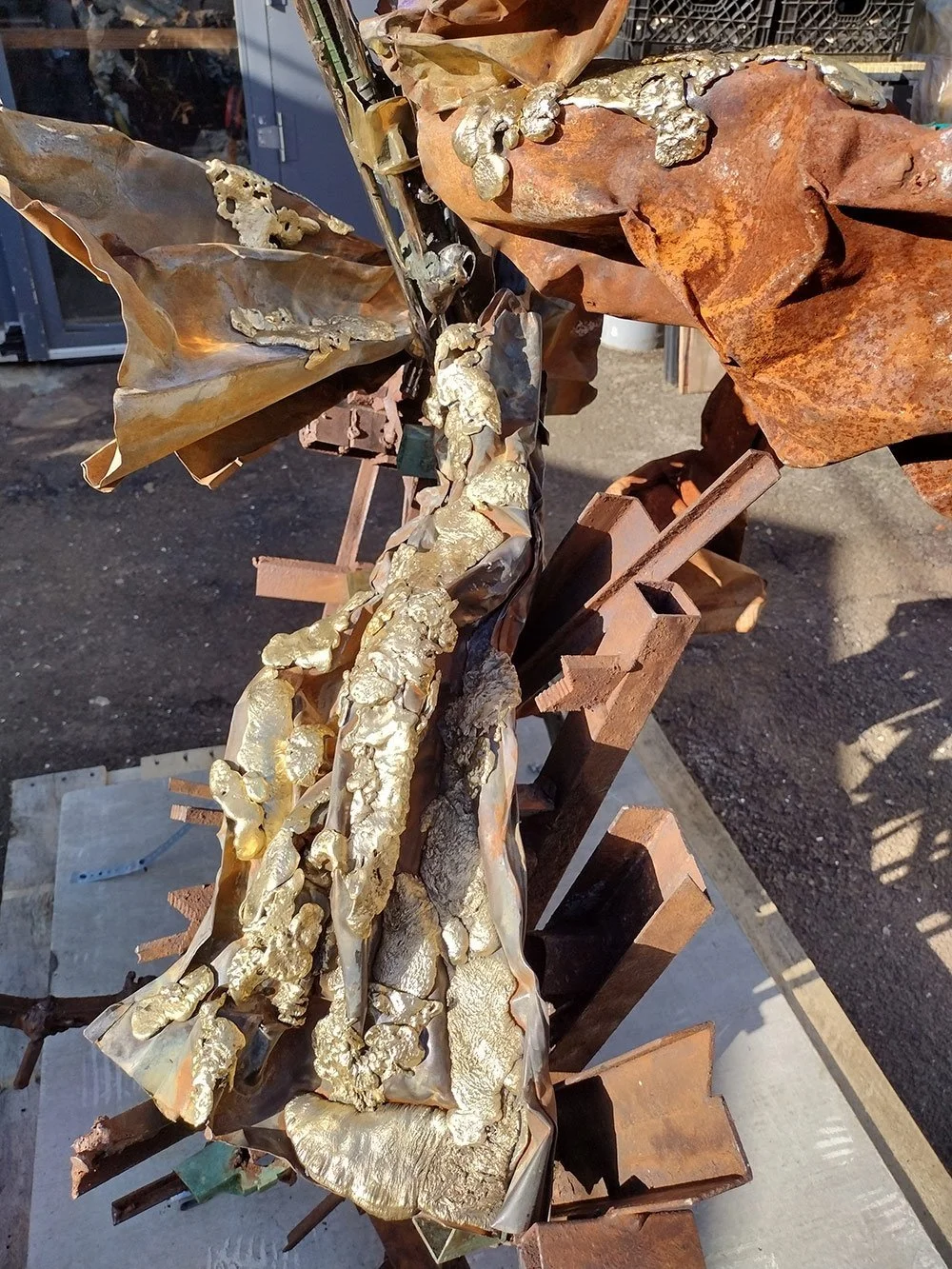
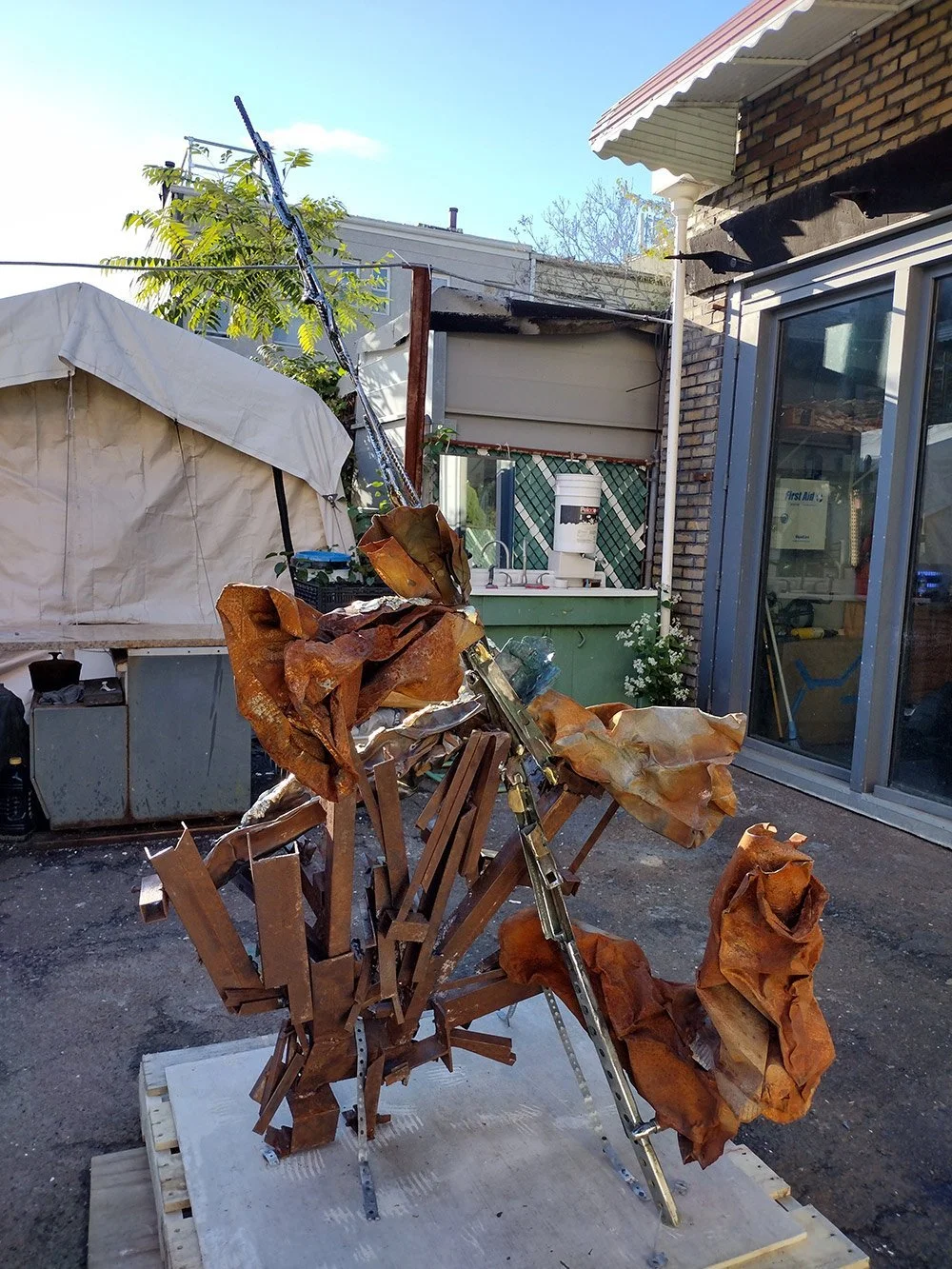
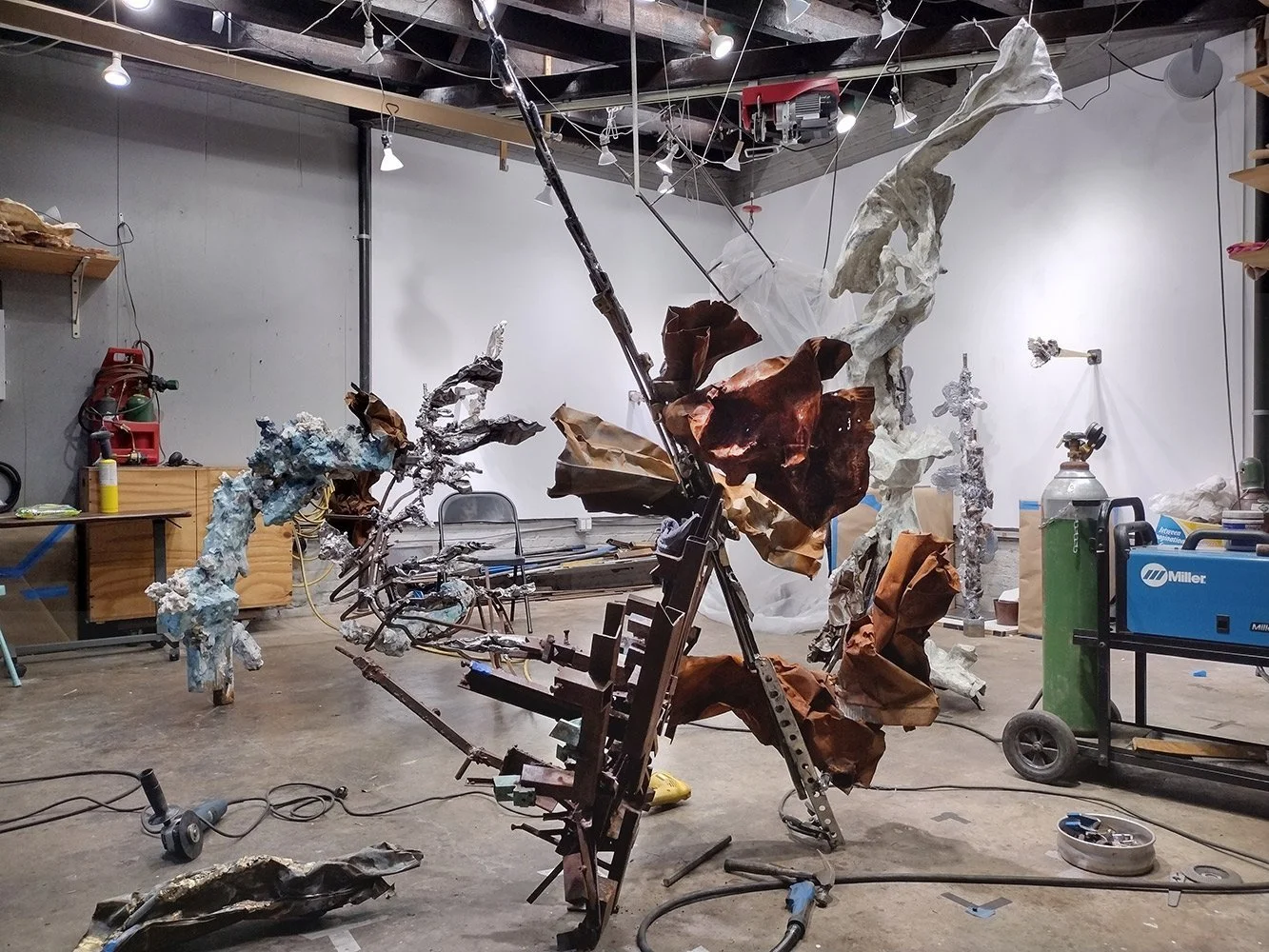
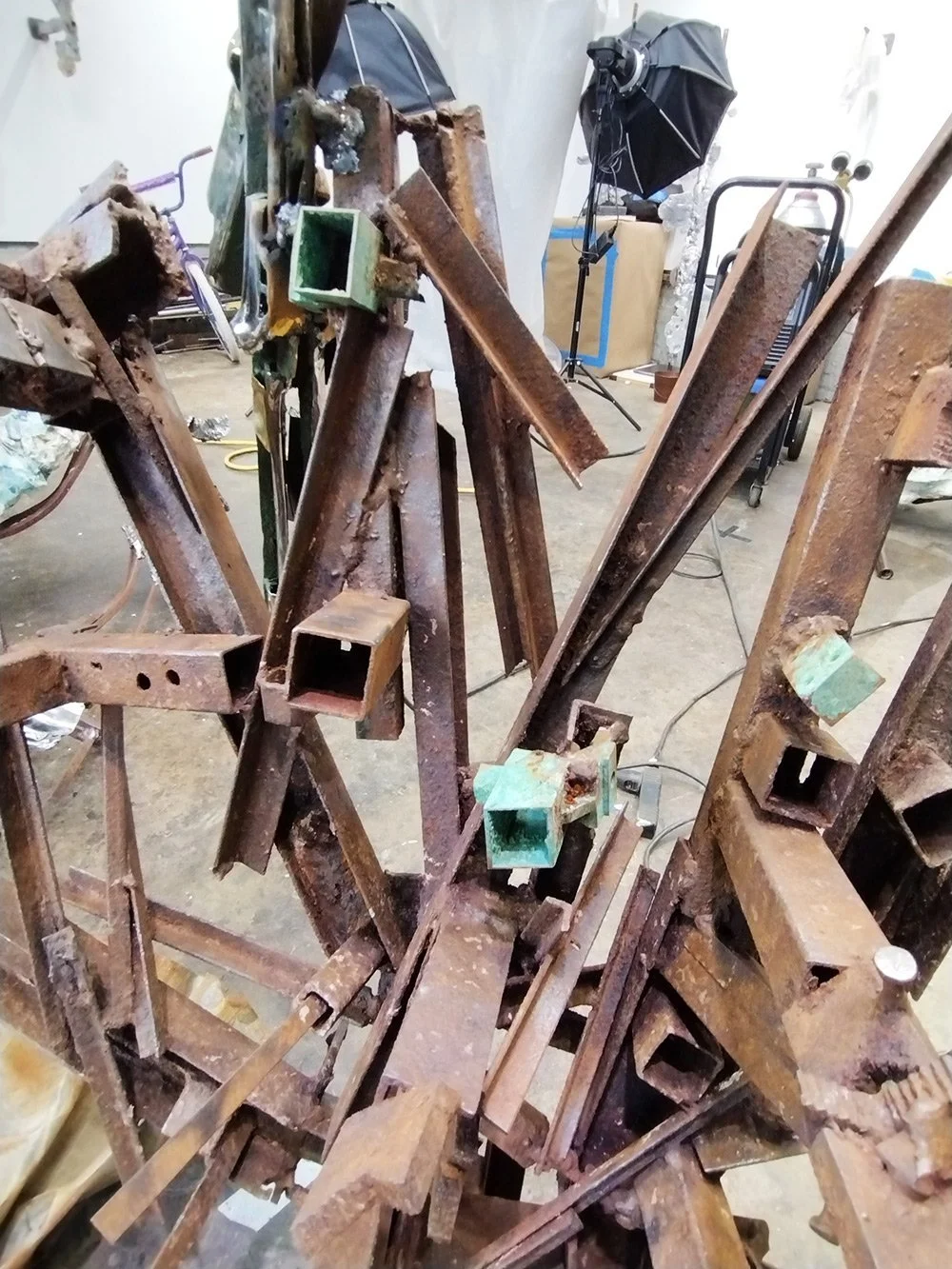
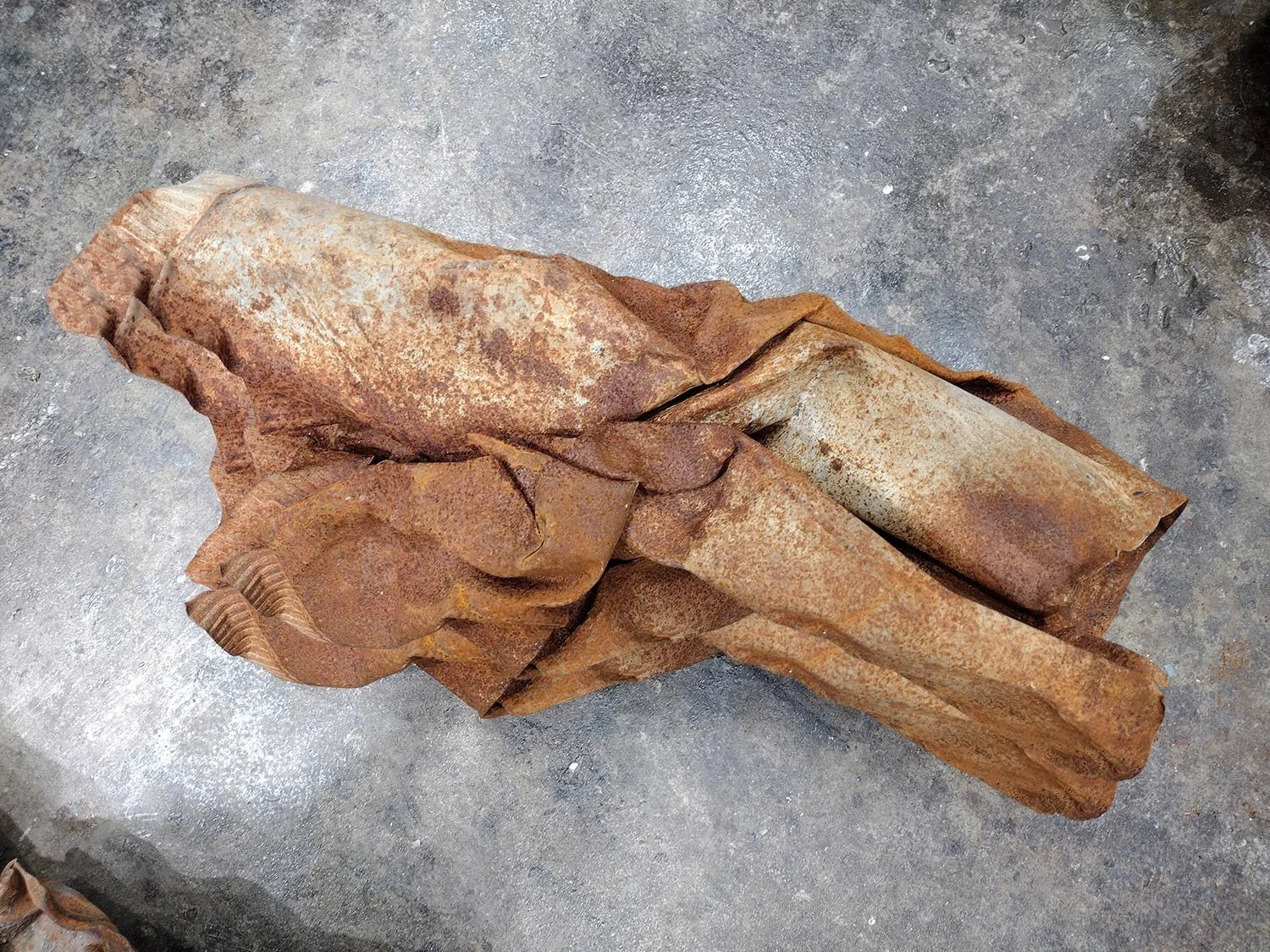
Depraved Hydration is built around an exposed rectilinear structure assembled from found and manufactured L-angle, square tube, and flat bar. At the beginning of the process, these steel elements were scattered across the floor. They were then fixed into a permanent structure while retaining much of their initial dispersed positions and directions, holding the accumulation in a kind of stopped state. Over several years, the steel was repeatedly exposed to acidic chemical treatments, weather, and time, allowing oxidation to penetrate deeply into the surface rather than functioning as an applied finish. Found bronze mechanical components are welded into the structure and patinated until substantial layers of verdigris develop.
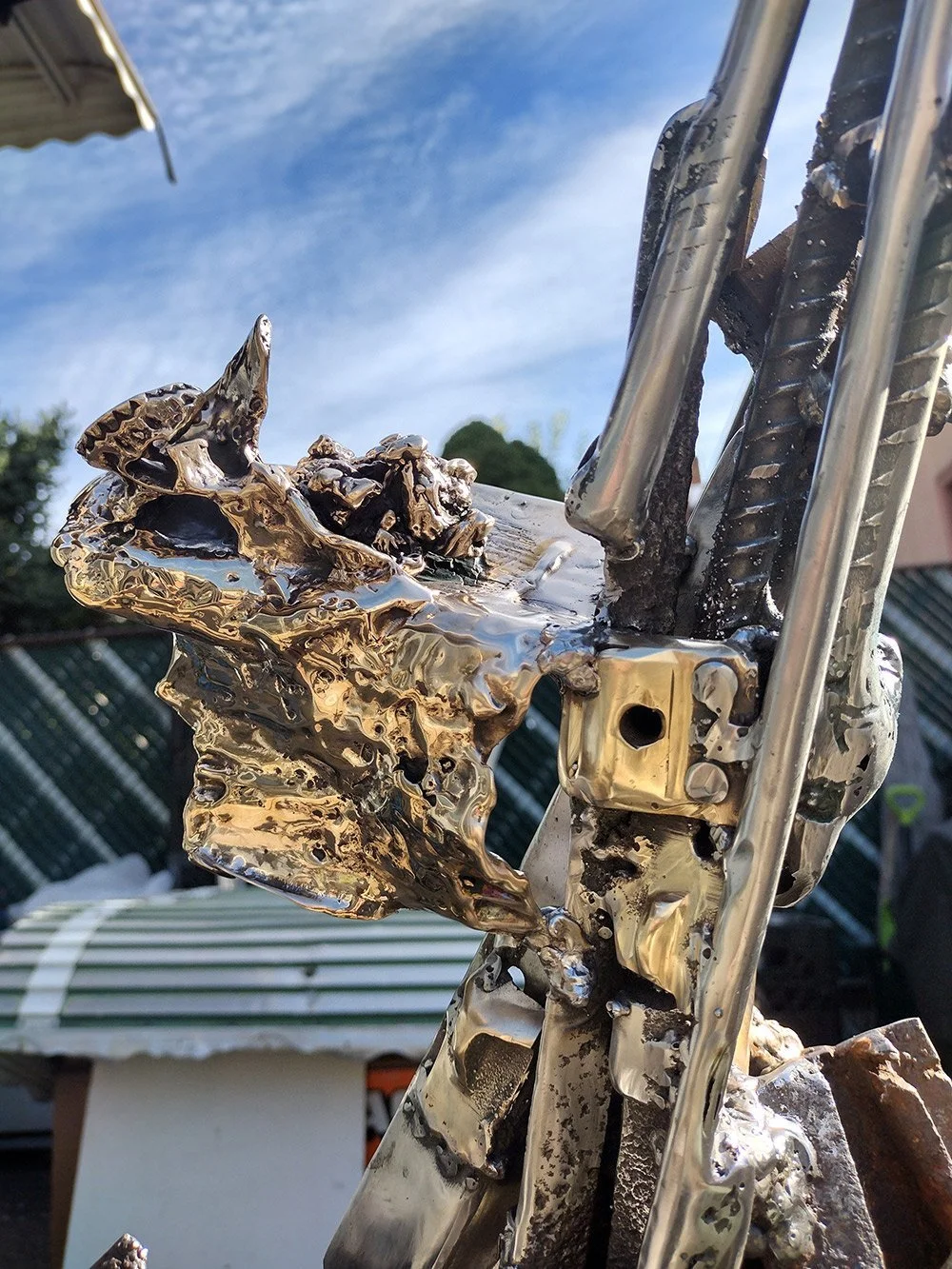
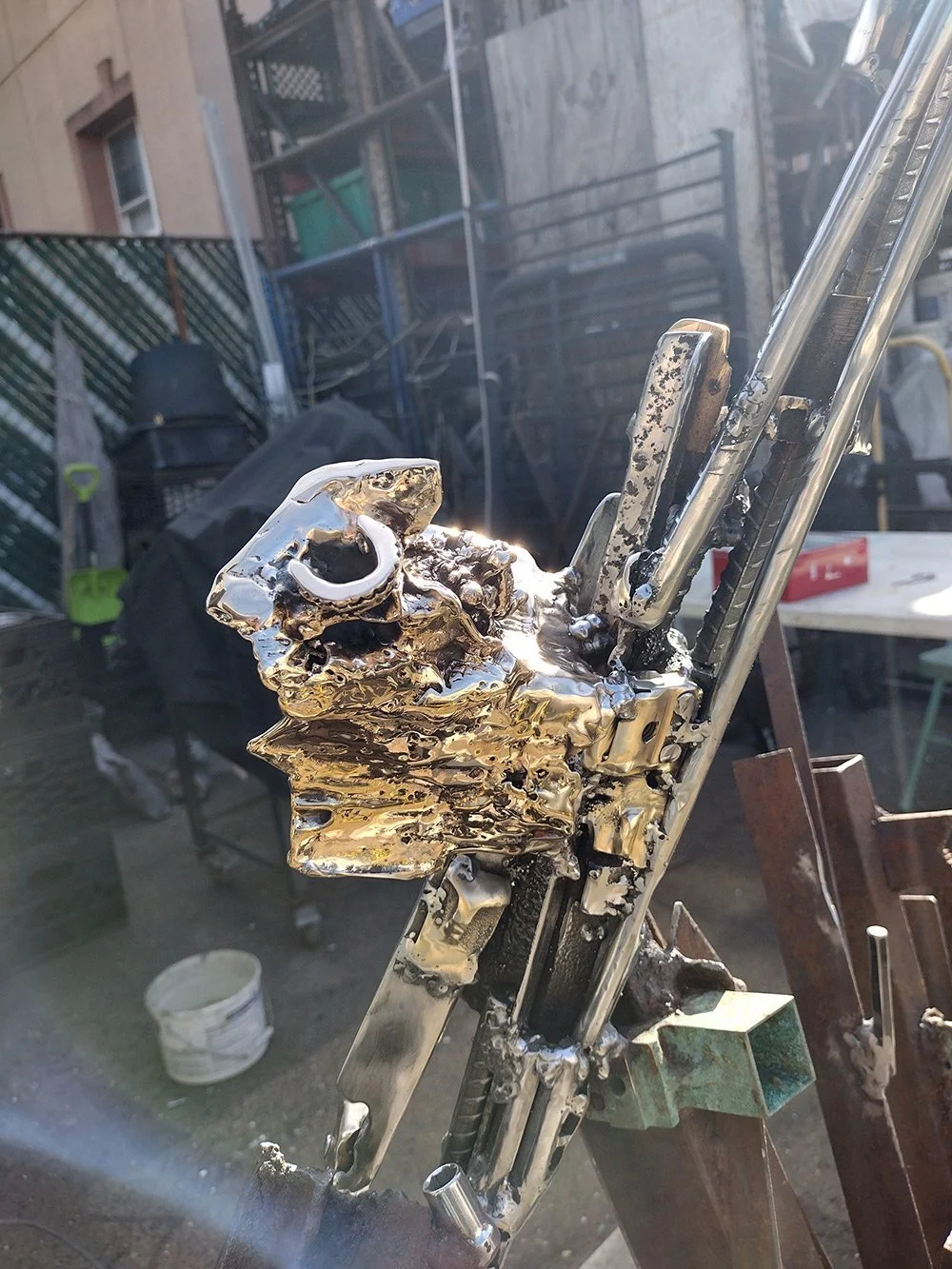
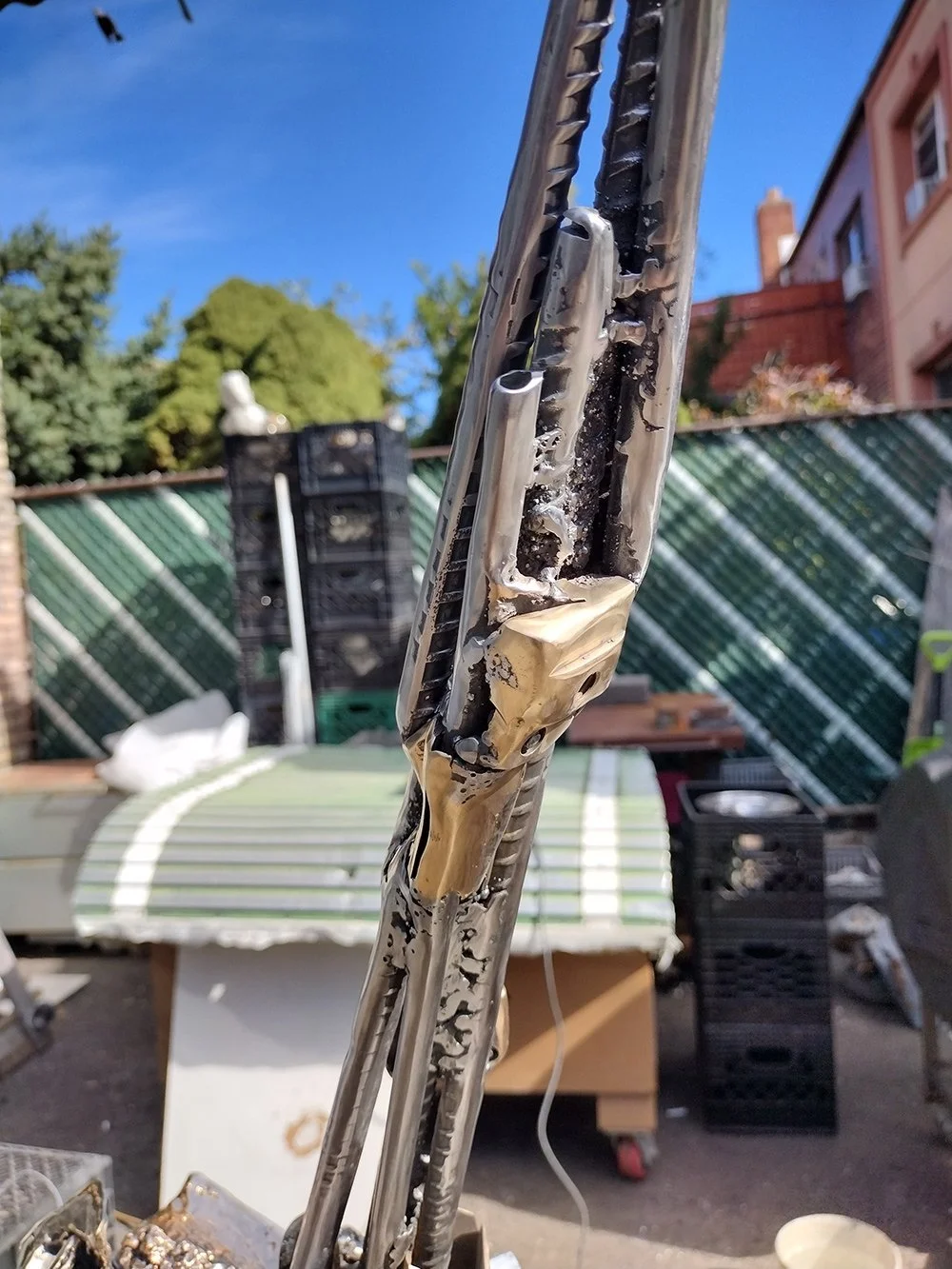
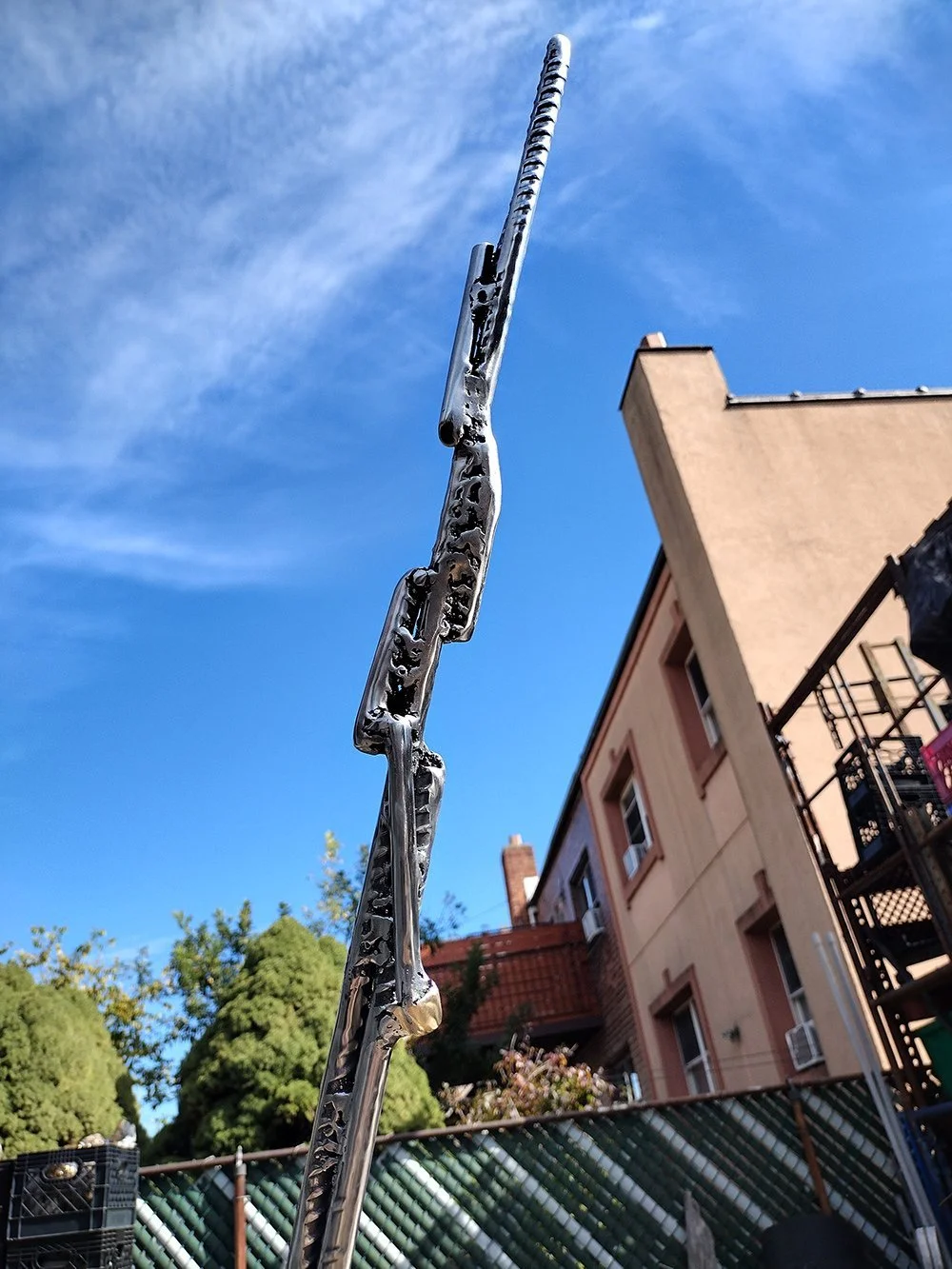
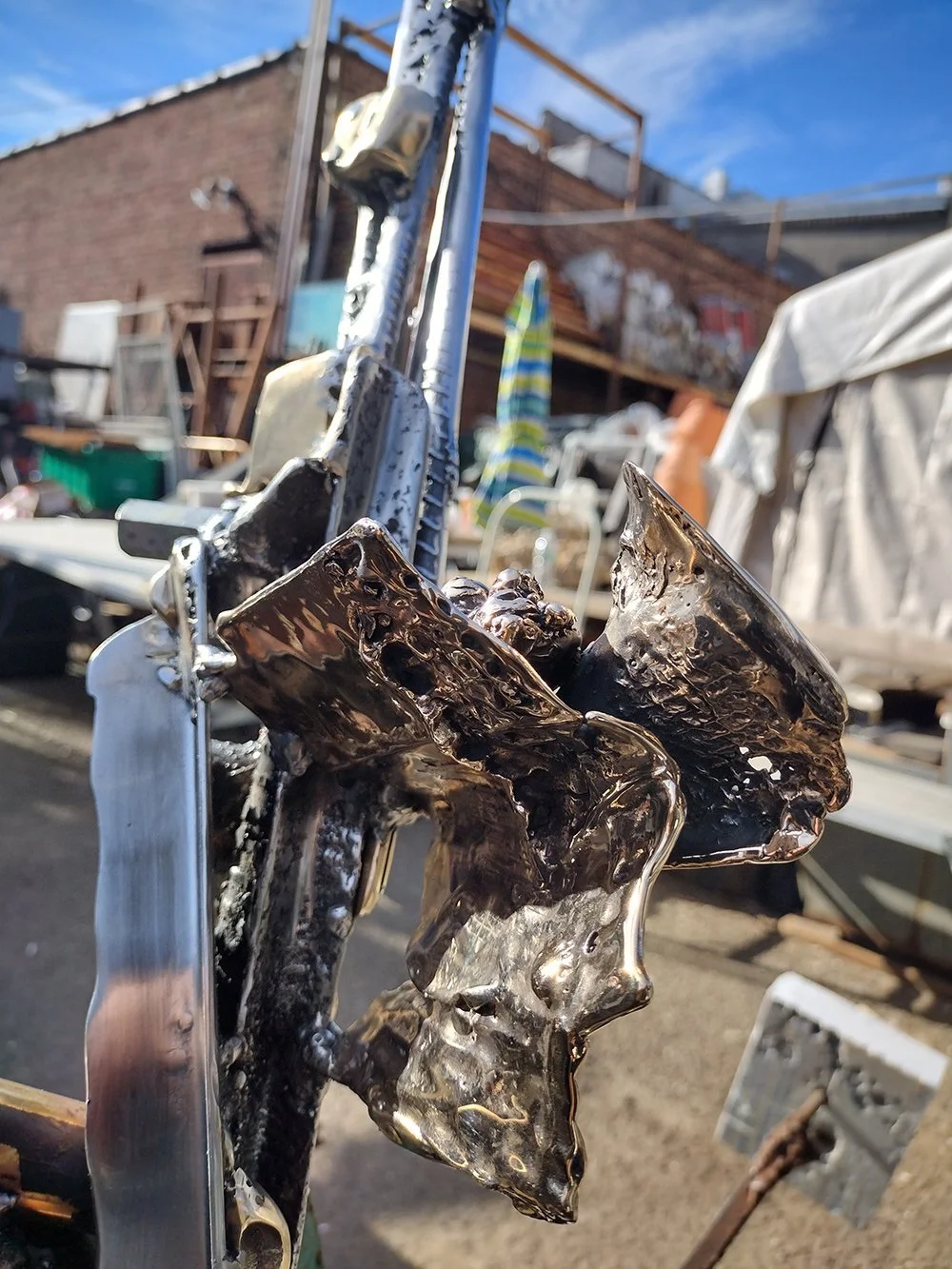
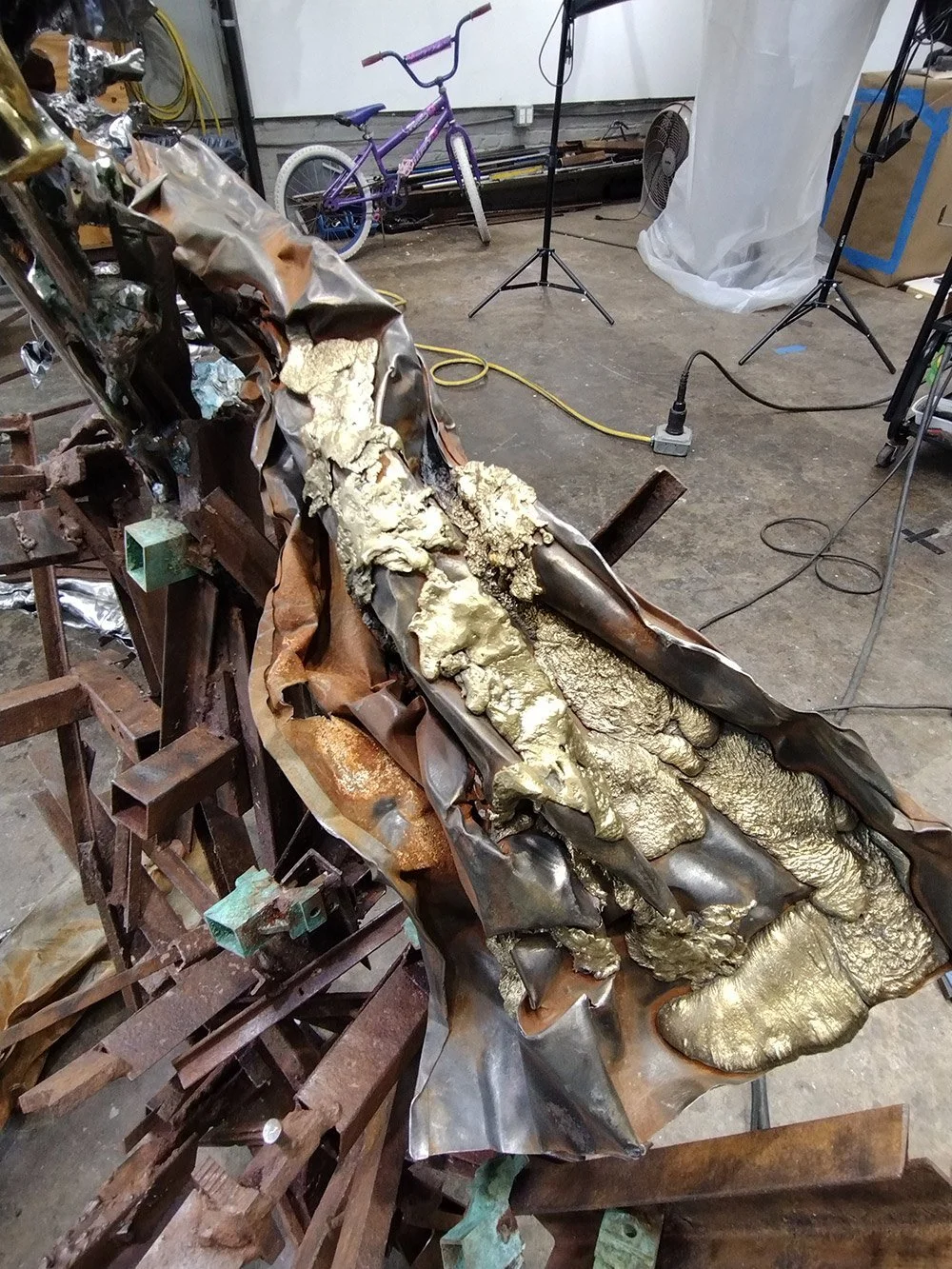
Twisted sections of ventilation duct flare outward from the underlying geometry and undergo the same extended oxidation process. Long spear-like elements extend from near the ground through the upper structure, assembled primarily from rebar, steel pipe, and bronze mechanical components. Although fundamentally linear, they twist as they move through space. Their surfaces are carved and refined while deliberately retaining partial evidence of their manufactured origins—rebar ribs, pipe openings, and mechanical fragments remain visible within the altered form. The completed surfaces are manually buffed to a high mirror polish.
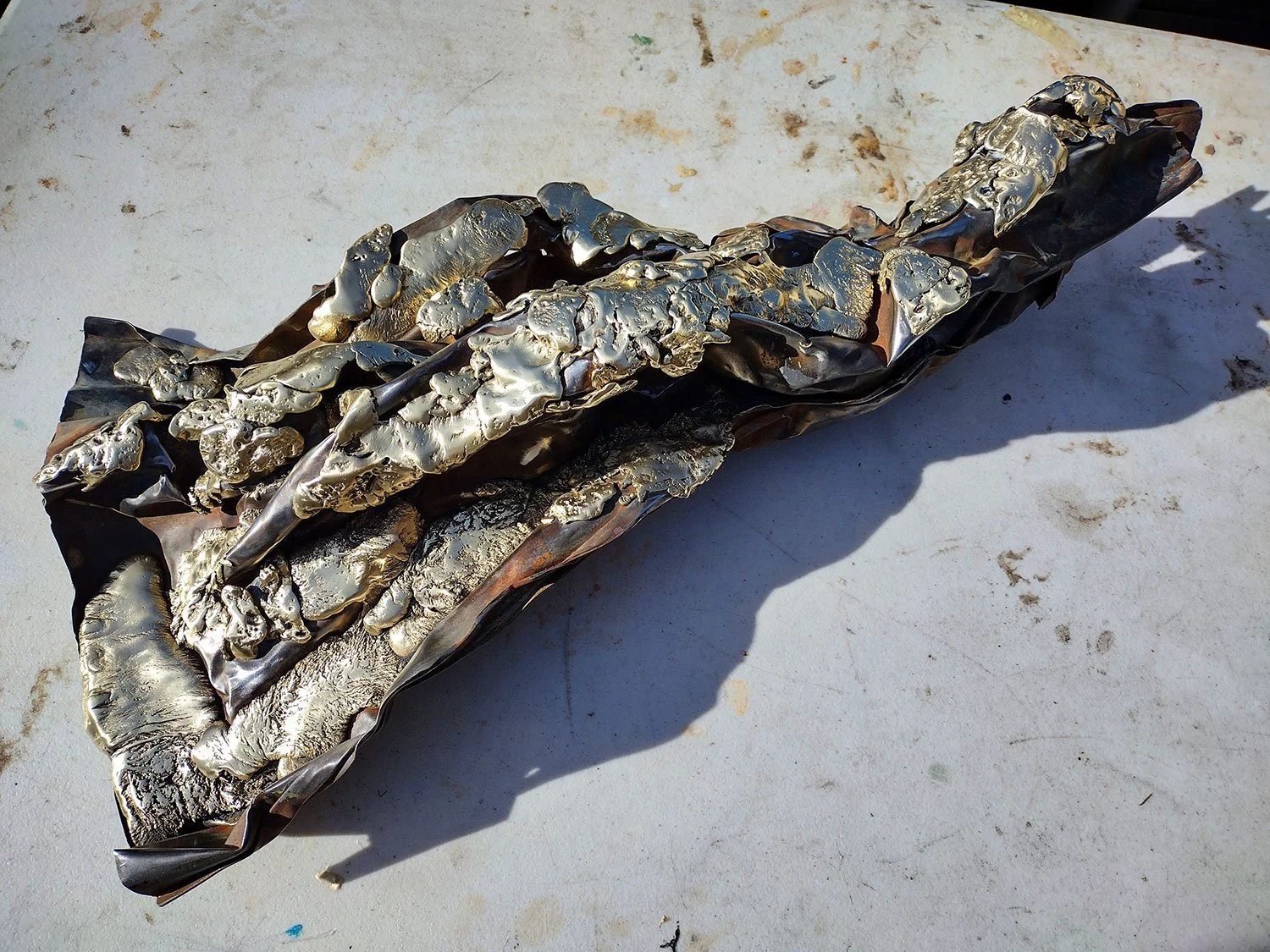
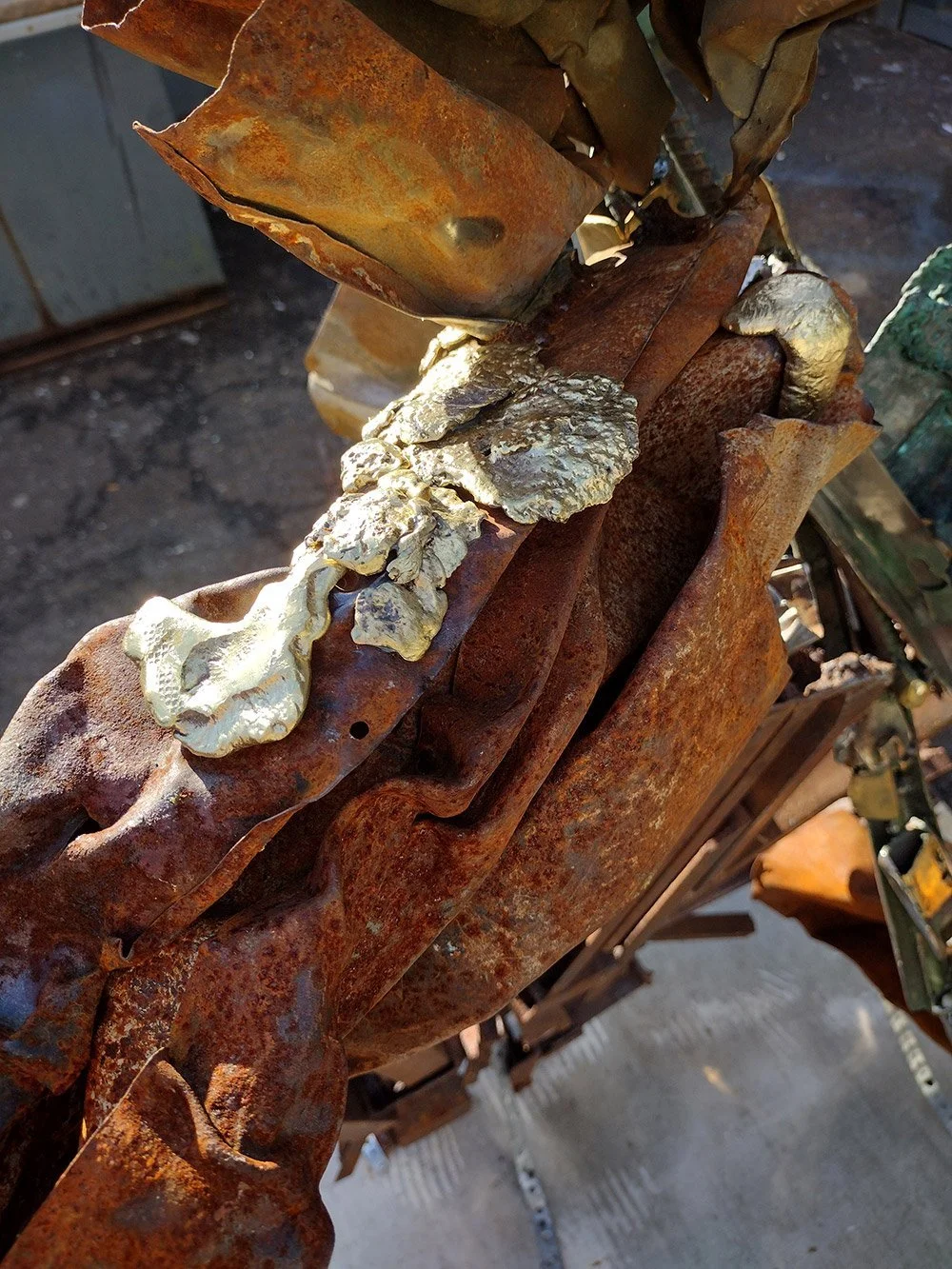
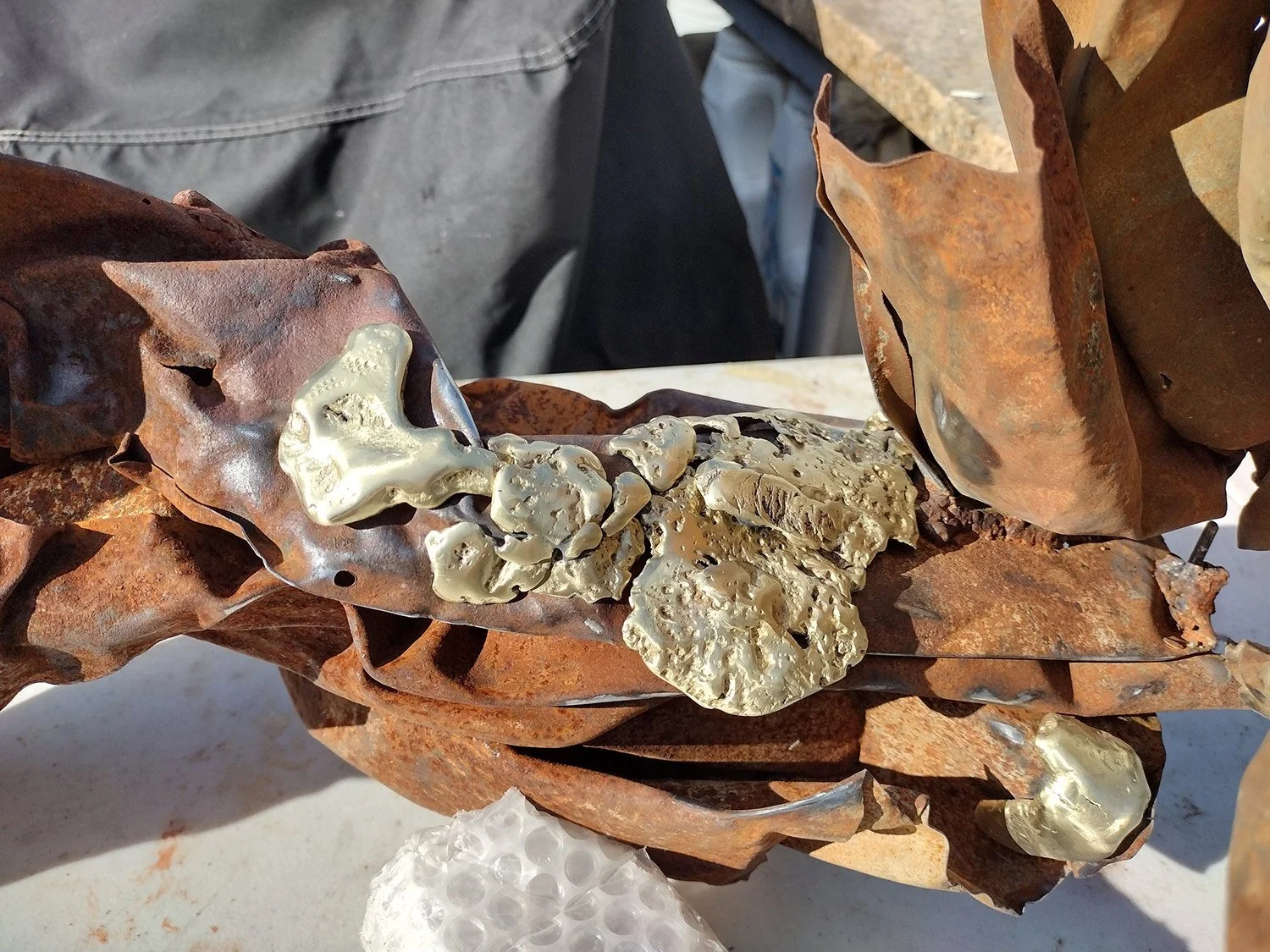
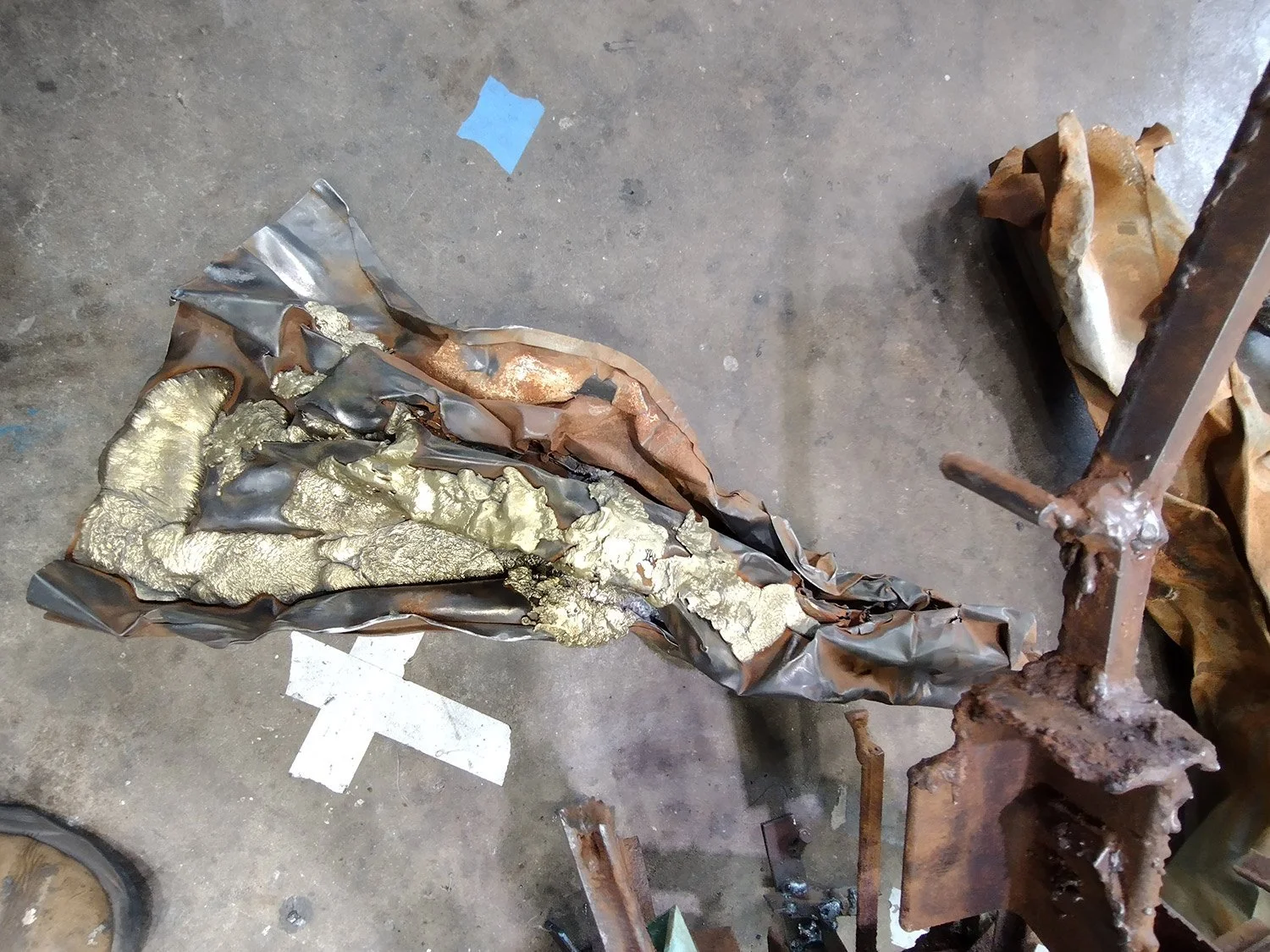
Elsewhere, molten brass is poured directly onto the formed steel in an experimental casting process, flowing into folds, seams, and structural junctions before being polished to the same highly reflective finish. The bright metallic passages do not form a continuous skin. They bridge, interrupt, and occupy dispersed points within the oxidized structure, while cavities and irregularities from the casting process remain visible.
The finished work holds an initially scattered field of engineered steel geometry, collapsed sheet, and molten fusion within the same physical structure. Long linear extensions establish multiple vectors through space, while the folded steel planes carry outward movement that is arrested by the rigidity of the material itself. Matte rust, verdigris, and mirror-polished passages distribute visual emphasis across different directions: a spear, folded plane, fused seam, or exposed armature can become temporarily dominant and then recede as the viewer moves.
The sculpture stands through three points of contact with the ground, continuing a structural principle that appears in Wind (2016), the Three-Legged Idols, and other floor-standing works in the exhibition. The structure remains exact, even as its organization resists settling into a single view.