Wind
2016
H84 × 101 × 60 in
H210 x 257 x 152 cm
Steel armature with resin-soaked fabric, polyester resin-encased soil on plexiglass, cast polyester resin, and collage on wood
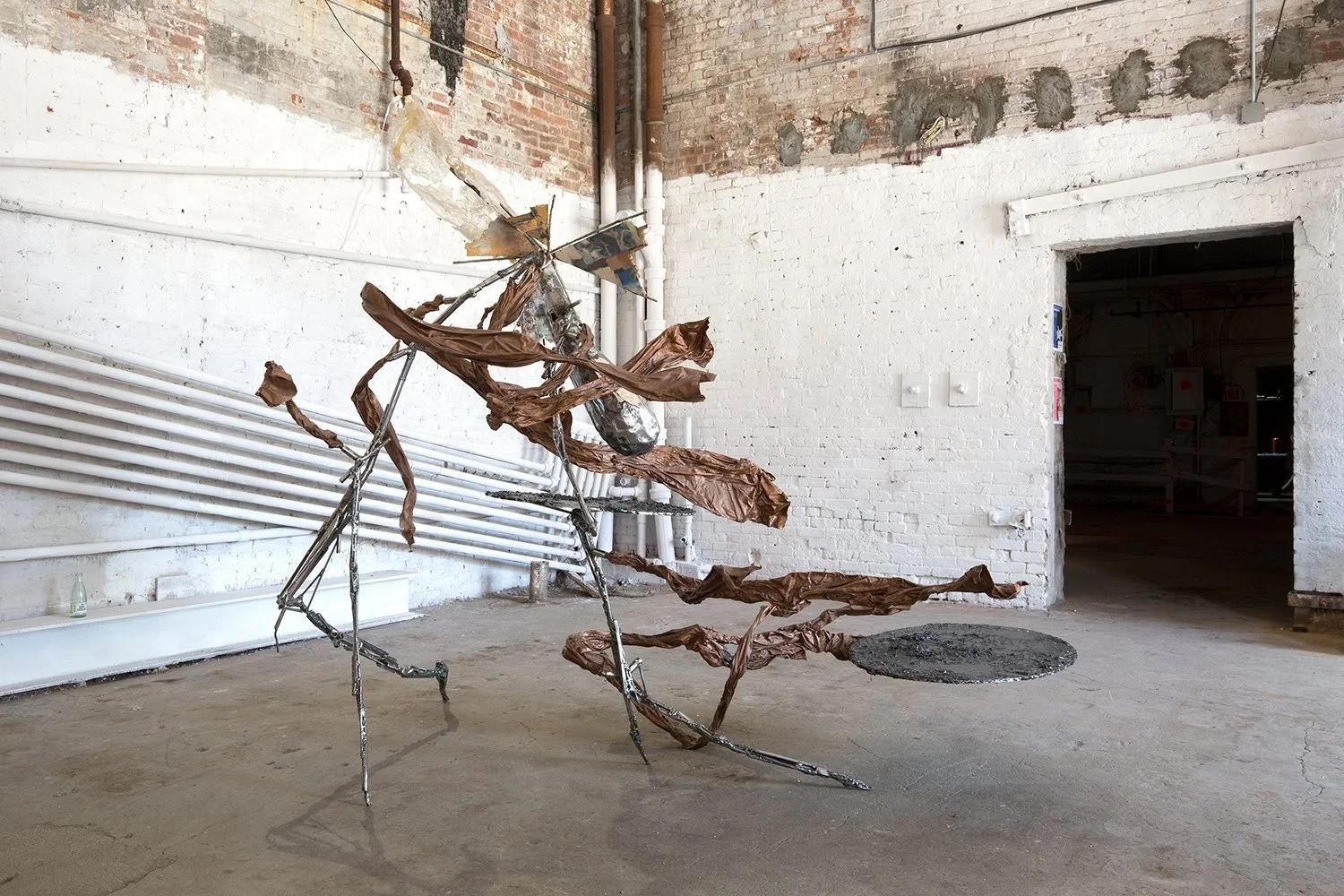
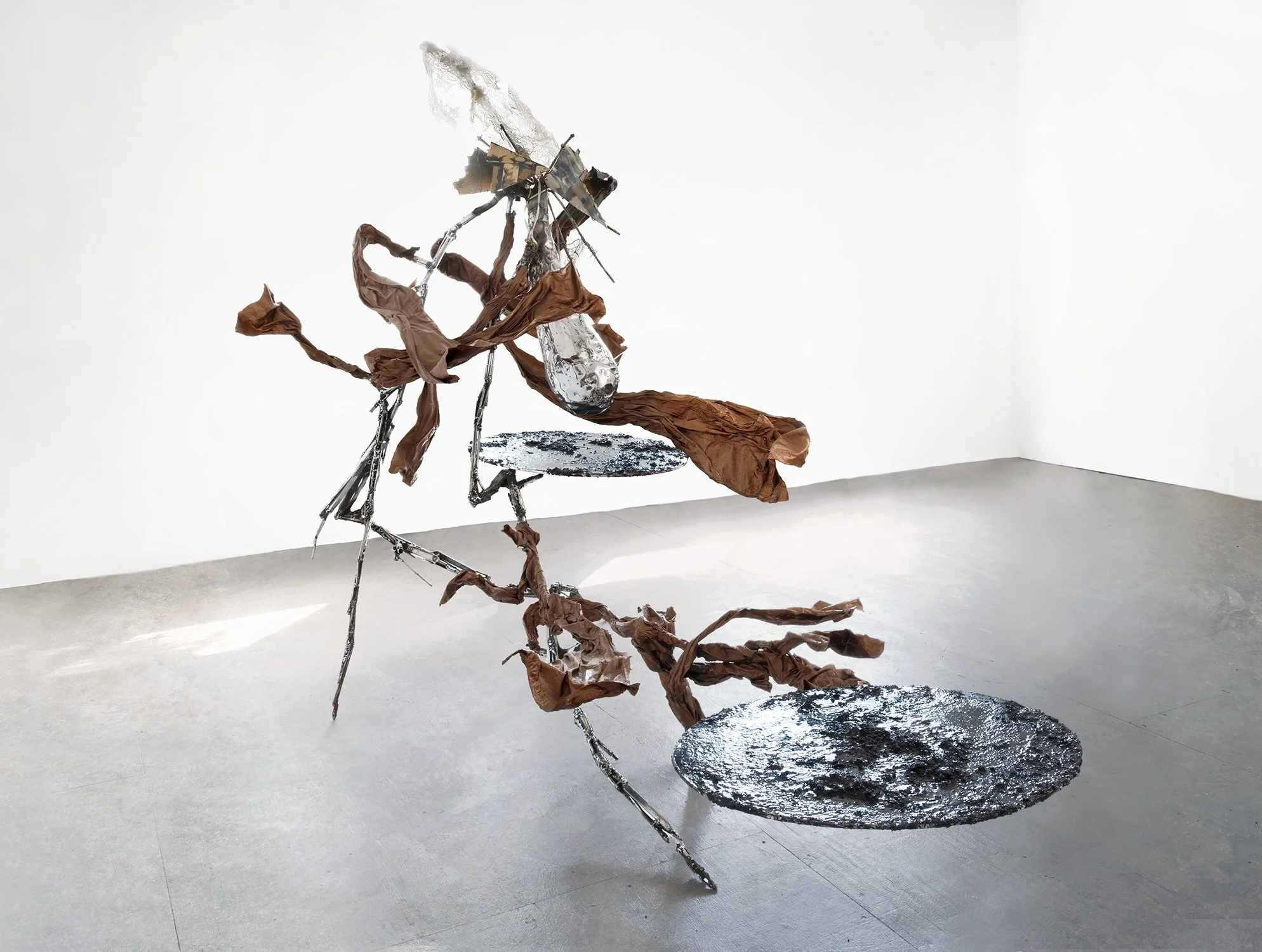
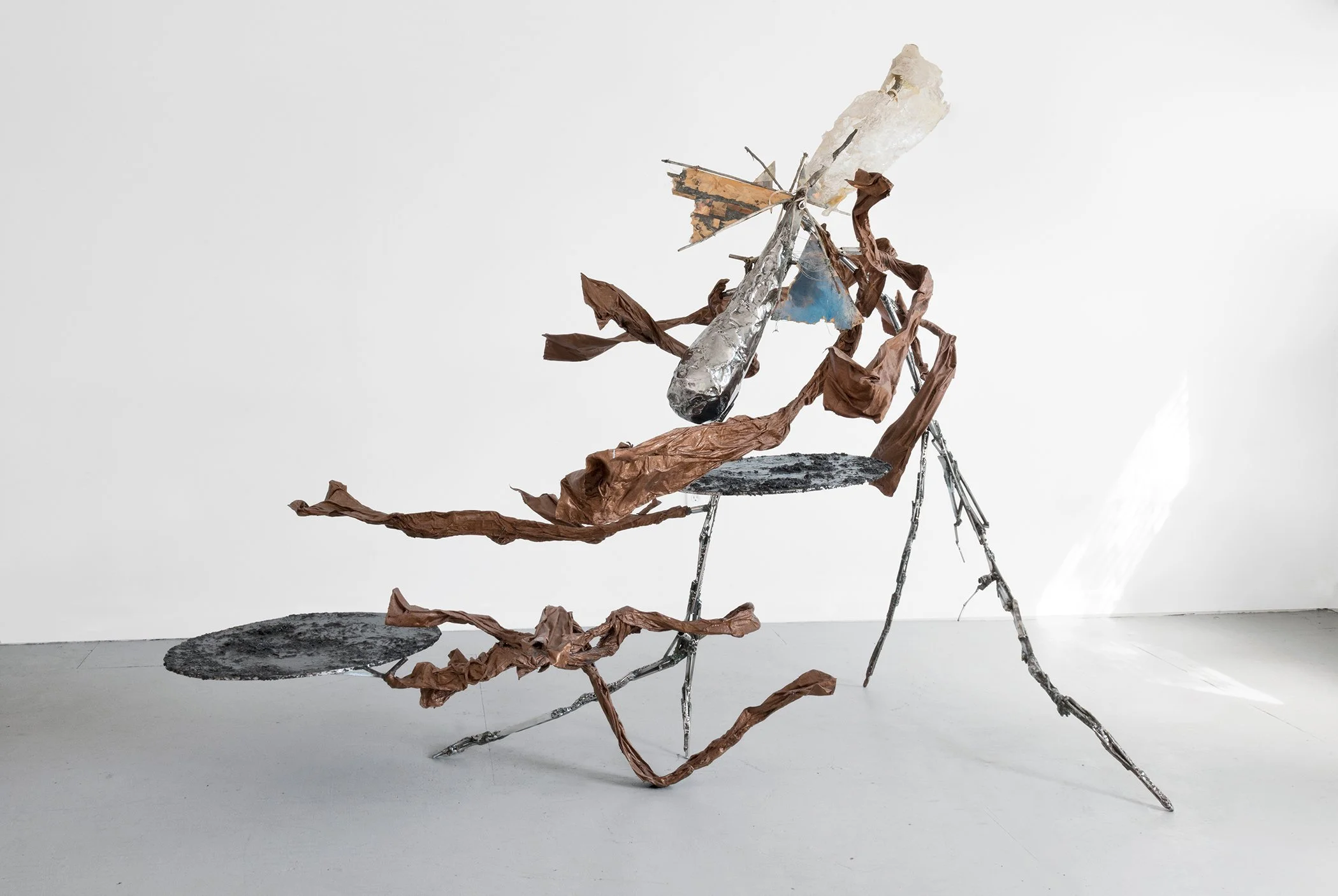
Wind is a large freestanding sculpture defined by a strong diagonal thrust. It stands on a variation of the three-legged stance. That contact with the ground returns in Hydroascendant, Hydroberg, and Depraved Hydration. Three-Legged Idols (2023-2024) used the same stance as a series form.
This triangular contact with the ground reflects a sustained interest in the rudimentary spatial wisdom required to erect an object on Earth, and marks an early recognition of its relationship with gravity.
Beyond this shared structural principle, Wind also anticipates the draping language that continues across a ten-year span into the newer floor-standing sculptures in the exhibition. The same concerns — forms caught mid-flow, fluidity, propulsion, and arrested motion — reappear in the later works.
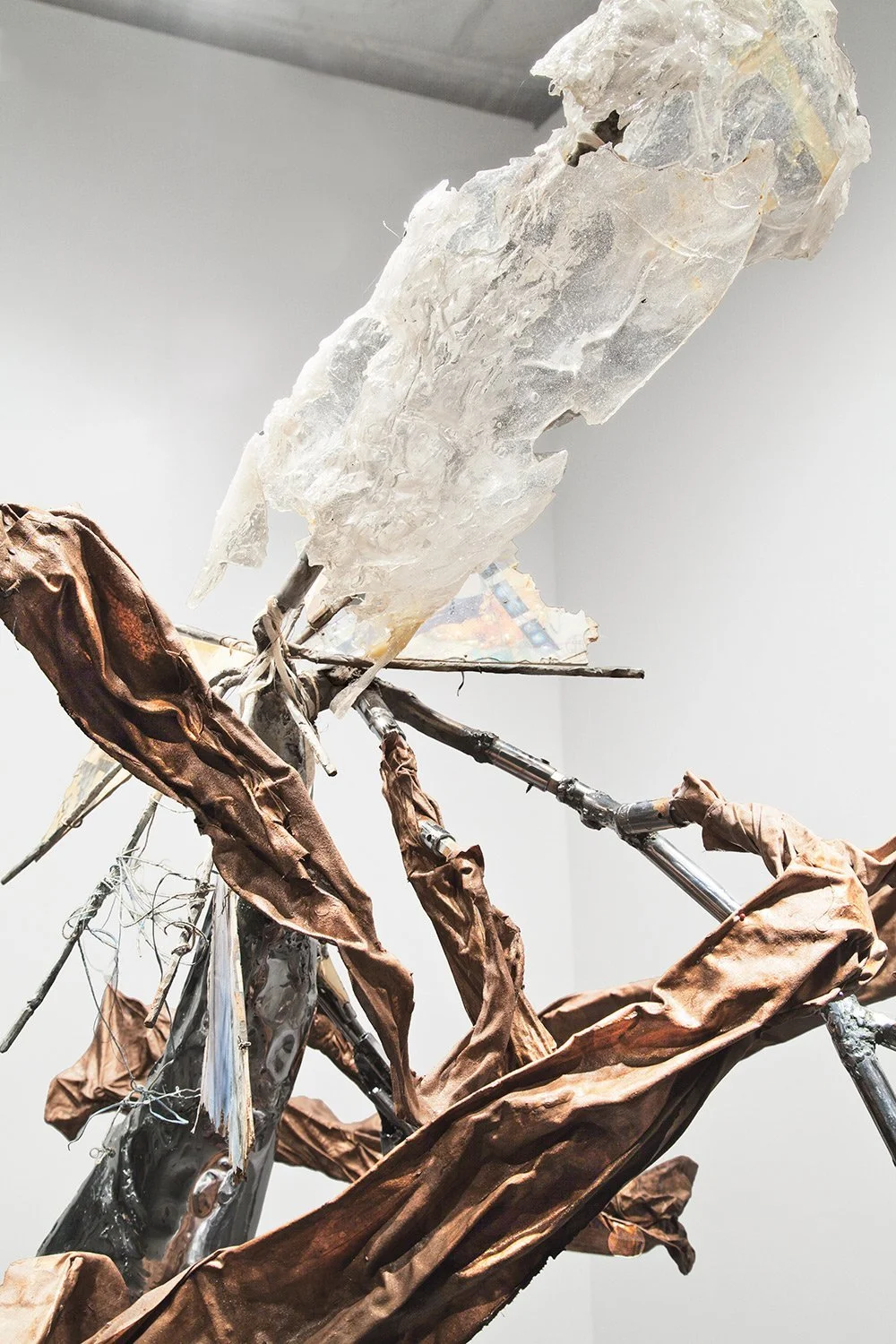
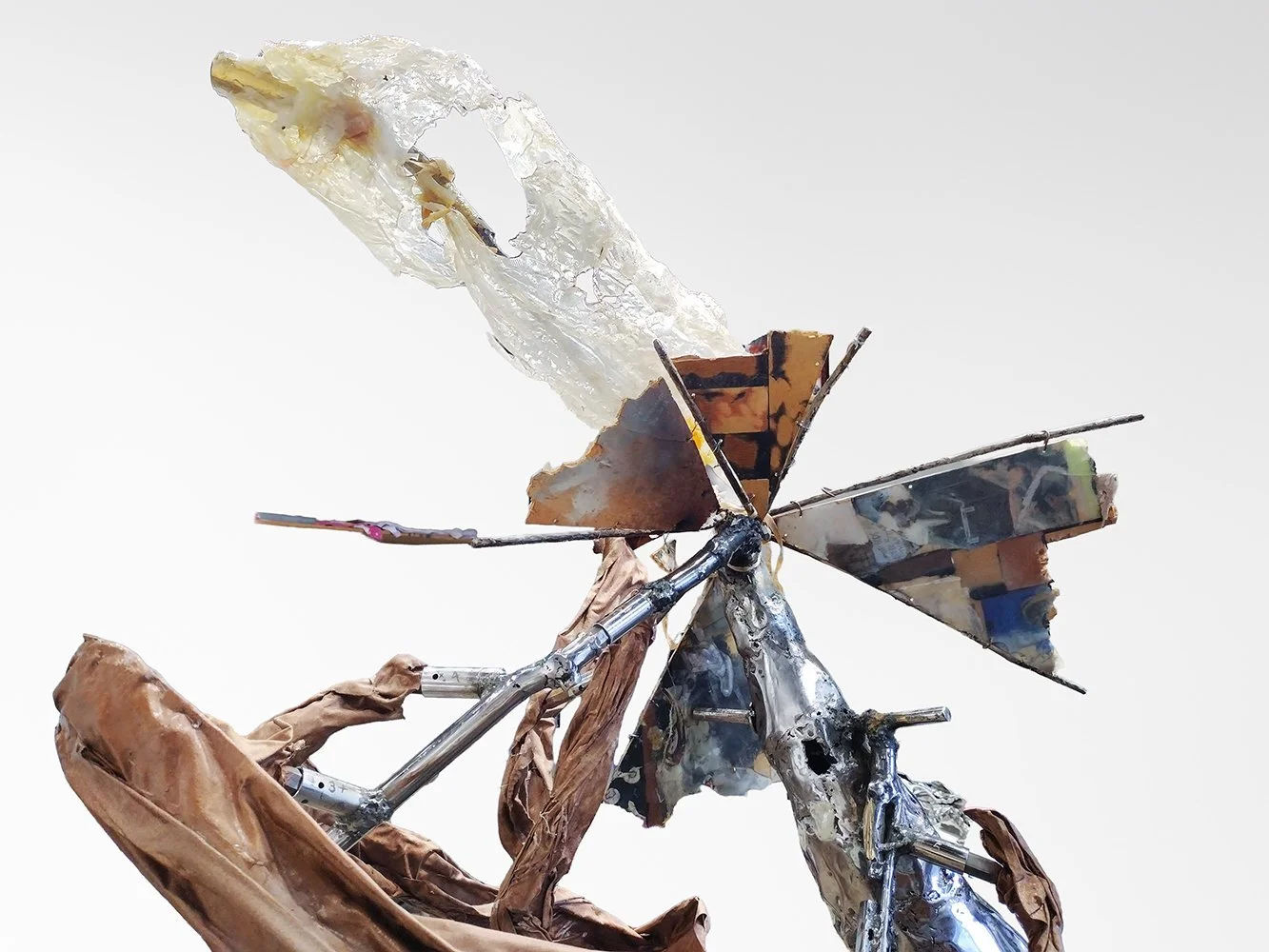
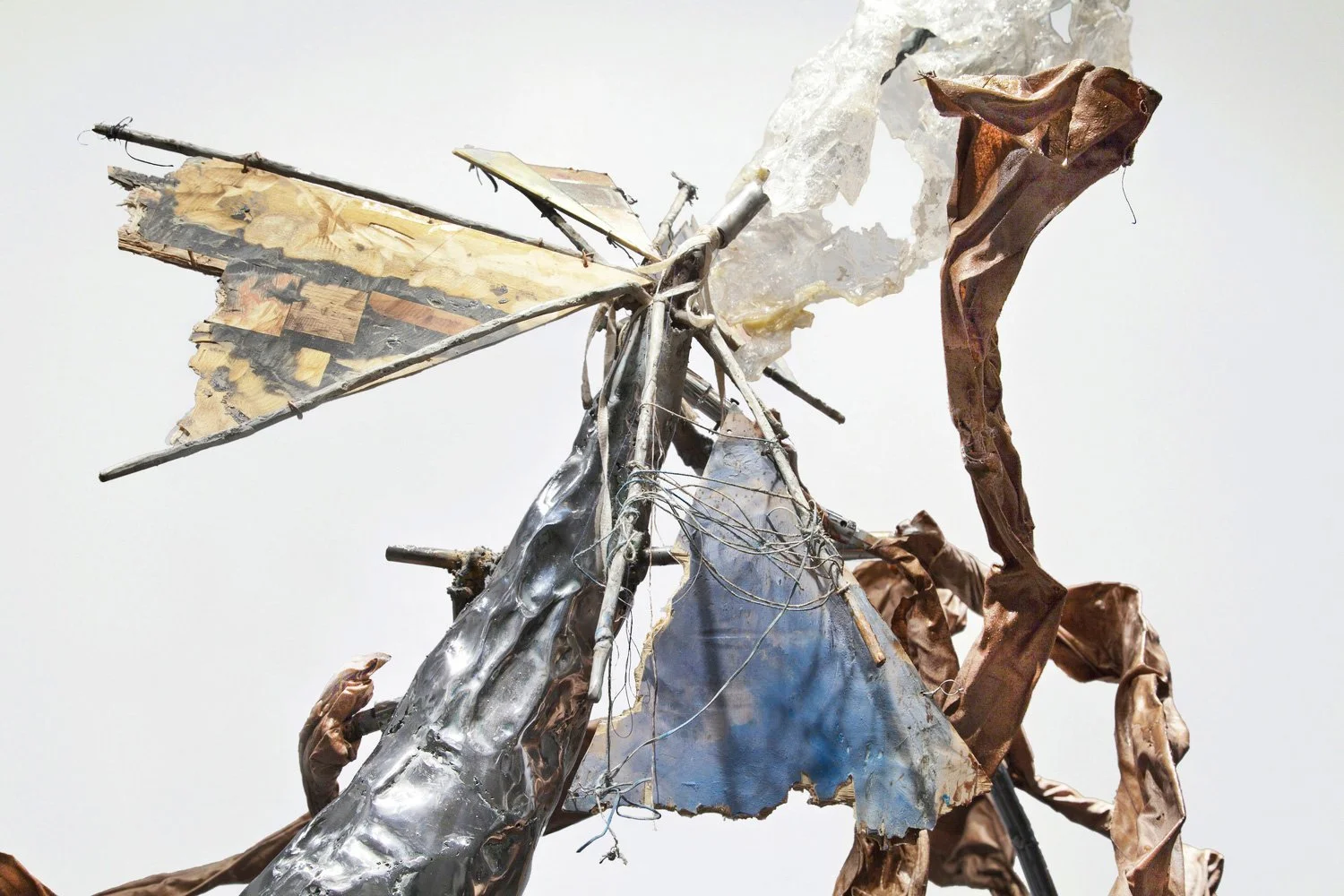
A thin, polished steel armature forms elongated, limb-like supports that lean and extend through space with unstable energy. At the core of the structure, a highly reflective metallic form — elongated and roughly pod-like — is held high within the frame. Brown resin-soaked fabric twists and trails outward in wind-blown, organic ribbons, capturing arrested gestures of movement. The fabric surface carries a subtle metallic shimmer and holds the force that once animated the whole in a state of mid-dispersal fluidity.
The upper section incorporates translucent, torn polyester resin elements and a radial collage structure on wood, marked with pencil and watercolor, and threaded with wires and mixed materials. Two dark circular platforms of resin-encased soil are both elevated within the structure, neither resting on the floor. Their suspension generates a floating sensation and offers a sense of plane or landscape whose dimensions remain deliberately undetermined.
Rather than depicting wind, the sculpture enacts its effects through tension, suspension, and resistance. The work remains at the precise moment in which ongoing flux is held and made tangible. Through its expansive yet fragile structure, Wind gives form to invisible force, allowing the atmospheric tension between motion and arrest to become perceptible.